Most people think of Physical Education as just a “games period” where students run around a field. But if you are here at FitEduHub, you are looking for the truth. As an expert in this field, I can tell you that Physical Education is the very foundation of human civilization and personal excellence
In this 2,000-word deep dive, we will peel back the layers of what PE truly represents, its scientific roots, and why it is the most important “subject” you will study
1. The Etymology: Where does the word come from?
To understand the Meaning, we must first look at the words themselves. The term “Physical Education” is composed of two distinct Latin-rooted concepts.
- Physical (Latin: Physica): Pertaining to the body, its constitution, and its organic systems. This includes our muscular strength, cardiovascular endurance, and skeletal health.
- Education (Latin: Educatio): Meaning “to lead out” or “to bring up.” It is the process of systematic instruction and development of the mind and character.
Expert Summary: Expert Summary:
Therefore, Physical Education is the process of educating the body to achieve perfection of the mind—a concept that highlights the impact, scope, and importance of Physical Education in human development.
2. Authentic Definitions: What the Legends Say
A single definition cannot capture the vastness of PE. Here are the most authentic definitions used in professional physical education curricula worldwide.
A. The Holistic Perspective (Central Advisory Board of PE)
“Physical Education is the process of education through physical activities. It is the development of the total personality of the child to its fullness and perfection in body, mind, and spirit.”
B. The Skill Acquisition Perspective (J.F. Williams)
“Physical Education is the sum of man’s physical activities, selected as to kind, and conducted as to outcomes.”
C. The Organic Growth Perspective (H.C. Buck)
“Physical Education is that part of general education which considers of those activities which develop and maintain the human body.”
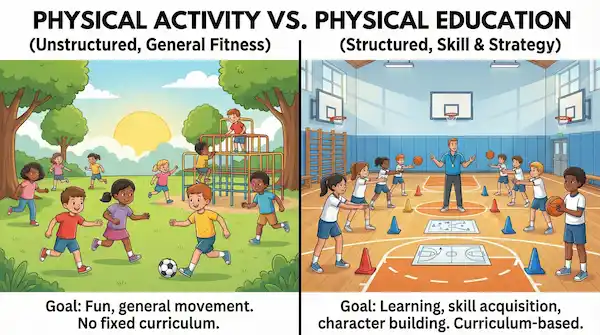
3. Physical Education vs. Physical Activity: The Big Difference
This is where most people get confused. Are they the same? No.
| Feature | Physical Activity | Physical Education |
| Nature | Any movement that uses energy. | A structured, planned curriculum. |
| Goal | General fitness or fun. | Skill acquisition and character building. |
| Assessment | Not measured. | Evaluated through tests and performance. |
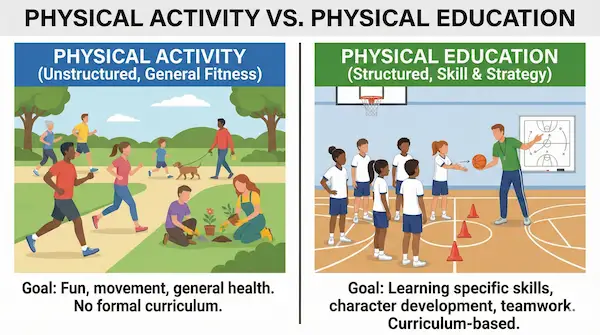
- Real-Life Example: Walking to the grocery store is Physical Activity. Walking a specific route while maintaining a target heart rate of 120 BPM to improve aerobic capacity is Physical Education in action—guided by the logic of sports science
4. The 4 Pillars of Meaningful PE
To truly understand PE, you must see it through these four lenses of development.
1. The Physical Pillar (Biological Growth)
It’s about the Somatic development. This includes increasing the density of your bones and the elasticity of your muscles.
- Real-Life Example: A teenager who practices PE principles will have a higher “Physical Reserve,” meaning they will be less likely to suffer from chronic pain or fatigue in their 30s and 40s.
2. The Cognitive Pillar (Intellectual Depth)
PE requires you to solve problems. In a split second, you must decide whether to pass the ball or shoot. This develops Executive Function in the brain.
- Real-Life Example: Chess is often called “mental gymnastics,” but a fast-paced game of Tag or Kabaddi is “physical chess,” requiring high-speed logical thinking.
3. The Social Pillar (Interpersonal Skills)
PE is the original social network. It teaches you how to cooperate with people you might not like for a common goal.
- Real-Life Example: When a captain consoles a player who missed a penalty, that is Social Education that translates directly into being a better manager in a corporate office.
4. The Affective Pillar (Emotional Stability)
Managing the “highs” of winning and the “lows” of losing. PE builds Emotional Intelligence (EQ).Together, these pillars explain the impact, scope, and importance of Physical Education in real life.
- Real-Life Example: An athlete who can control their temper after a bad referee call is learning self-regulation that prevents road rage or workplace meltdowns later in life.
Expert Tips
- Don’t Just Move, Understand: Always ask yourself why a certain movement is being taught. Understanding the “Logic” (Biomechanics) behind a stretch makes it 50% more effective.
- The ‘Definition’ Test: If your physical activity doesn’t have a goal (outcome) and a plan (selected kind), it’s just movement, not education. Start adding specific goals to your daily exercise.
5. Breaking the Myths: Common Misconceptions about PE
Despite its scientific depth, Physical Education is often misunderstood. Let’s clear the air with facts.
- Myth 1: “PE is only for athletes.”
- Reality: PE is for everyone—from a 5-year-old child to a 70-year-old retiree. It is about improving your own body’s “baseline,” not just winning medals.
- Myth 2: “PE is a waste of academic time.”
- Reality: Research shows that students who participate in PE have better focus, higher memory retention, and improved grades in subjects like Math and Science. This is due to increased blood flow and oxygen to the brain.
- Myth 3: “It’s just about ‘playing’ and ‘fun’.”
- Reality: While it is fun, it is highly structured. Every game has a “Learning Objective”—whether it’s learning the physics of a ball or the psychology of teamwork.
Real-Life Example: Think of an Executive who skips lunch to work more. Without the fundamentals of PE, they don’t realize that a 10-minute brisk walk would actually make them 30% more productive for the rest of the day.
6. Modern Relevance: Why We Need PE in 2026
In an era of AI, automation, and remote work, our bodies are moving less than ever before. This makes the “Fundamentals of PE” a survival tool for the 21st century.
A. Combating “Digital Sedentary” Life
Most people now spend 8–12 hours in front of a screen. PE provides the logic of Ergonomics and Postural Awareness.
- The Science: PE teaches us how to counteract “Anterior Pelvic Tilt” and “Kyphosis” (hunchback) caused by long hours of sitting.
B. Mental Health Crisis
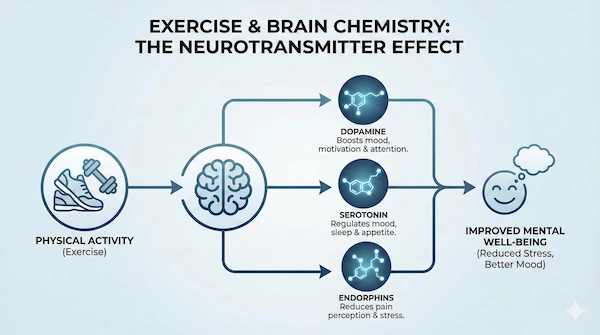
With rising anxiety and depression levels globally, physical activity is the most underutilized antidepressant.
- The Science: PE principles help us understand how to use “Moderate Intensity” exercise to trigger the release of Dopamine and Serotonin naturally.
7. Professional Scope: Beyond the Playground
If you think a degree in Physical Education only leads to being a “PT Teacher,” think again. The career landscape is massive:
- Sports Performance Analyst: Using data and video to help pro-athletes improve their technique.
- Kinesiotherapist: Helping patients regain movement after strokes or major surgeries using “Optimal Loading”.
- Corporate Wellness Consultant: Designing health programs for big tech companies to keep their employees fit and productive.
- Sports Psychologist: Working on the mental “Tunnel Vision” of elite competitors. These careers are explained in detail under career opportunities in Physical Education.
- Real-Life Example: A Physiotherapist treating a runner’s sprained ankle will use the POLICE principle. They protect the joint but encourage “Optimal Loading”—this professional knowledge is a direct branch of PE Fundamentals.
8. Conclusion: The Foundation of Your Best Self
Physical Education is not a subject you study; it is a lifestyle you build. From understanding the Meaning (holistic development) to applying the Logic (Sports Science), every piece of knowledge we’ve discussed serves one purpose: To help you live a more capable, confident, and long life.
As we move forward at FitEduHub, use these fundamentals as your compass. Whether you are lifting weights, running a race, or just sitting at your desk, move with purpose and move with knowledge.
Expert Tips
- The 30-Minute Rule: For every hour you sit, do 2 minutes of “Active Mobility”—shoulder rolls, neck stretches, or standing calf raises. This keeps your “Organic Systems” awake.
- Teach to Learn: The best way to master these definitions is to explain them to someone else. Tell a friend why “Physical Activity” is different from “Physical Education”—it will solidify your own understanding.
Frequently Asked Questions (FAQs)
1. What is the literal meaning of Physical Education?
The term is derived from two Latin concepts: “Physica” (pertaining to the body) and “Educatio” (to lead out or develop). Literally, it means the systematic process of educating and developing the human body to its highest potential.
2. How do experts define Physical Education?
Experts like H.C. Buck define it as the part of general education that uses physical activities to maintain and develop the human body. Others, like J.F. Williams, emphasize that it is the “sum of man’s physical activities” chosen for specific developmental outcomes.
3. Is Physical Education different from Physical Activity?
Yes, there is a big difference. Physical Activity is any movement that uses energy (like walking to a shop), whereas Physical Education is a structured, planned curriculum designed to teach specific skills, strategies, and character values.
4. Why is PE considered “holistic” development?
It is called holistic because it doesn’t just train your muscles. PE works on four pillars simultaneously: Physical (body systems), Cognitive (brain and strategy), Social (teamwork), and Affective (emotional control).
5. Can PE help in academic performance?
Absolutely. Scientific research shows that Physical Education increases blood flow and oxygen to the brain, which improves focus, memory, and cognitive function, leading to better grades in subjects like Math and Science.
6. What are the modern career options in this field?
Beyond being a PT teacher, you can become a Sports Performance Analyst, a Kinesiotherapist, a Corporate Wellness Consultant, or a Sports Psychologist]. These roles use the scientific principles of PE to improve human performance and health.
3 thoughts on “Meaning and Definition of Physical Education: Expert Guide”