
Introduction
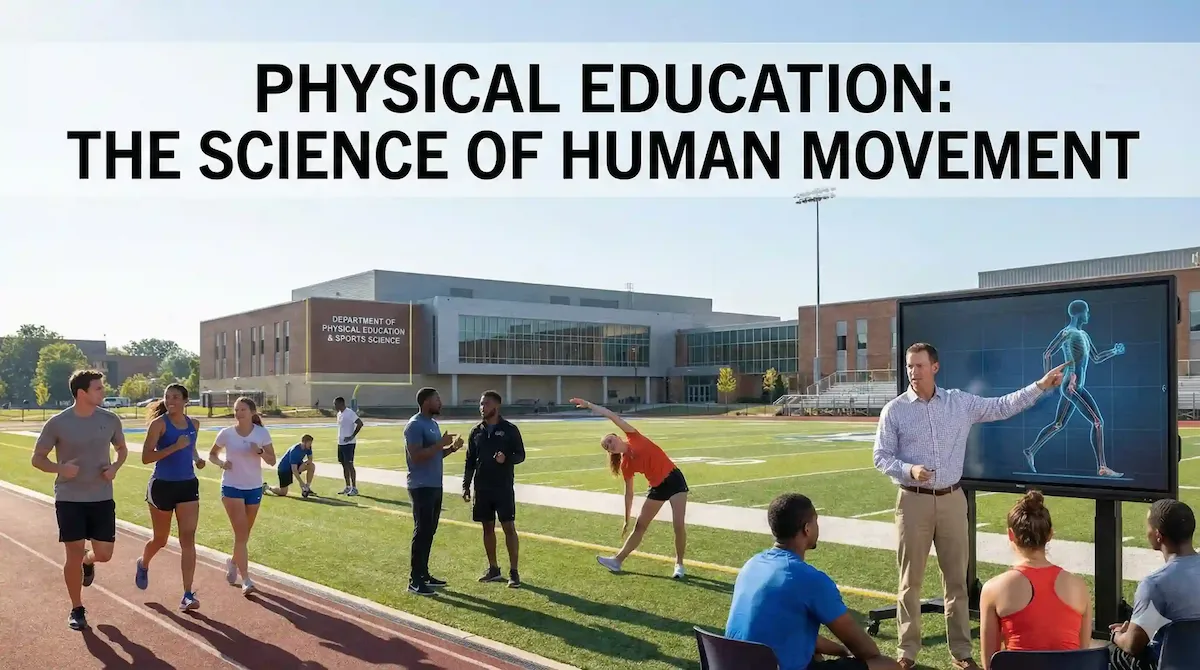
Many people think of Physical Education as simply a “games period” where students run around a field. However, Physical Education is much broader than sports and recreational activities. It is an educational process that uses movement and physical activity to support physical fitness, motor skills, health awareness, social development, and overall well-being.
At FitEduHub, our goal is to explain Physical Education in a clear and practical way. In this guide, we explore what Physical Education means, its educational foundations, how it differs from general physical activity, and why it remains an important part of lifelong learning and healthy living.
1. The Etymology: Where Does the Term Come From?
To understand the meaning of Physical Education, it is useful to look at the origins of the two words that make up the term.
Physical: The word relates to the body and its functions. In the context of Physical Education, this includes areas such as physical fitness, movement, muscular strength, cardiovascular endurance, coordination, and overall physical development.
Education: The term refers broadly to the process of learning, instruction, and personal development. Education is not limited to academic knowledge; it can also involve the development of skills, attitudes, values, and healthy behaviours.
Together, Physical Education can be understood as an educational process that uses physical activity and movement experiences to support the development of the whole person.
This broader understanding highlights the impact, scope, and importance of Physical Education in individual and social development.
2. Authentic Definitions: What Do Professional Definitions Tell Us?
A single definition cannot fully describe every aspect of Physical Education. Different educators and scholars have emphasized different aspects, including physical activity, development, skills, and education.
A. The Holistic Perspective — Central Advisory Board of Physical Education
“Physical Education is the process of education through physical activities. It is the development of the total personality of the child to its fullness and perfection in body, mind, and spirit.”
This perspective emphasizes that Physical Education is not limited to physical fitness. It can contribute to the broader development of the learner.
B. The Physical Activity Perspective — J.F. Williams
“Physical Education is the sum of man’s physical activities, selected as to kind, and conducted as to outcomes.”
This definition highlights the selection and organization of physical activities according to intended educational outcomes.
C. The Physical Development Perspective — H.C. Buck
“Physical Education is that part of general education which considers of those activities which develop and maintain the human body.”
This perspective emphasizes the role of physical activities in developing and maintaining the body as part of general education.
Editorial note: Because these are attributed quotations, their exact wording and original sources should be verified before publication if you want to present them as historical quotations.
3. Physical Education vs. Physical Activity: The Big Difference
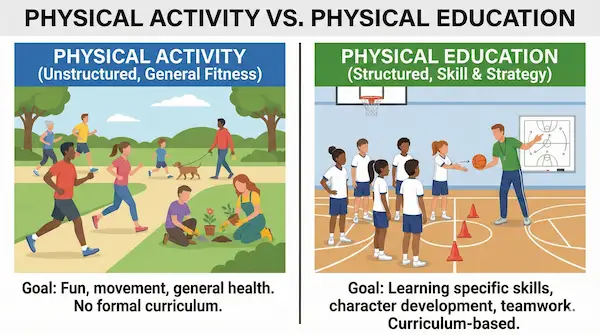
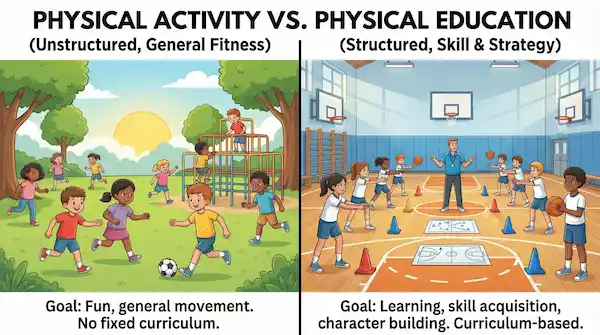
This is an important distinction because Physical Education and physical activity are related, but they are not the same thing.
| Feature | Physical Activity | Physical Education |
|---|---|---|
| Nature | Any bodily movement that requires energy expenditure. | A structured educational process involving physical activity and movement learning. |
| Purpose | May support fitness, health, recreation, transportation, or daily activities. | Develops physical skills, knowledge, fitness, health awareness, and other educational outcomes. |
| Assessment | Usually not formally assessed. | May include assessment of skills, knowledge, fitness, participation, and learning outcomes. |
In simple terms: Physical activity is what we do, while Physical Education is a structured educational process that teaches us through movement and physical activity.
- Real-Life Example:
Walking to the grocery store is an example of physical activity. In contrast, participating in a structured walking session designed to improve aerobic fitness, following appropriate intensity guidelines, and learning how to monitor exercise intensity can be part of Physical Education in action. This structured approach applies principles explained through sports science to support specific learning and fitness goals.
4. The 4 Pillars of Meaningful PE
To truly understand Physical Education, it is helpful to view it through four interconnected areas of development: physical, cognitive, social, and affective development.
1. The Physical Pillar — Physical Development
The physical pillar focuses on the development and maintenance of physical fitness, movement abilities, and healthy physical function. This can include improvements in muscular strength, endurance, flexibility, coordination, balance, and bone health.
- Real-Life Example: A teenager who regularly participates in well-designed Physical Education activities can develop better movement skills, physical fitness, and healthy activity habits that may support an active lifestyle later in life.
2. The Cognitive Pillar — Intellectual Development
Physical Education also involves thinking, decision-making, problem-solving, and learning. During sports and movement activities, students may need to make decisions quickly, understand tactics, adapt to changing situations, and apply learned skills.
- Real-Life Example: In a fast-paced game such as Kabaddi, a player must observe opponents, make quick decisions, choose an appropriate movement or tactic, and respond to changing situations. These activities provide opportunities to practise decision-making and problem-solving.
3. The Social Pillar — Interpersonal Skills
Physical Education provides opportunities for students to interact and cooperate with others. Team sports and group activities can help develop communication, cooperation, leadership, responsibility, respect, and sportsmanship.
- Real-Life Example: When a team captain supports a player after a mistake, the experience provides an opportunity to practise empathy, communication, responsibility, and supportive leadership.
4. The Affective Pillar — Emotional Development
The affective pillar relates to emotions, attitudes, confidence, motivation, values, and self-regulation. Physical Education provides situations in which students experience success, disappointment, competition, cooperation, and challenge.
Together, these four pillars help explain the impact, scope, and importance of Physical Education in individual development and everyday life.
- Real-Life Example: An athlete who learns to remain calm after a disappointing result is practising emotional regulation and respectful behaviour in a competitive environment.
Expert Tips
- Don’t Just Move, Understand: Try to understand the purpose behind the movements and activities you perform. Learning basic principles of exercise, movement, and sports science can help you make more informed decisions about training and physical activity.
- The ‘Definition’ Test: A structured educational activity normally has a clear goal, appropriate activities, and an intended learning outcome. Simply moving the body is physical activity; Physical Education adds an educational purpose and learning process.
5. Breaking the Myths: Common Misconceptions About PE
Despite its educational and scientific foundations, Physical Education is often misunderstood. Let’s look at some common misconceptions.
Myth 1: “PE is only for athletes.”
- Reality: Physical Education is designed to support learners with different abilities, interests, and levels of physical fitness. Its purpose is not limited to competitive sport or winning medals.
Myth 2: “PE is a waste of academic time.”
- Reality: Physical Education can complement academic learning by supporting physical activity, concentration, classroom engagement, and overall student well-being. It should be viewed as part of a balanced education rather than simply as time away from academic subjects.
Myth 3: “It’s just about playing and having fun.”
- Reality: Physical Education can be enjoyable, but well-designed PE lessons have clear learning objectives. Students may learn movement skills, fitness concepts, teamwork, decision-making, safety, and healthy lifestyle habits through structured activities.
Real-Life Example: A student who takes a short active break during a long period of study may use movement as a simple way to reduce prolonged sitting and refresh their attention before returning to a task.
6. Modern Relevance: Why We Need PE in 2026
In an era of digital technology, automation, and increasingly sedentary work and study patterns, opportunities for regular physical activity are especially important. Physical Education can help people understand how movement, fitness, health, and active lifestyles contribute to overall well-being.
A. Combating Sedentary and Digital Lifestyles
Long periods of sitting and screen-based work or study can reduce opportunities for movement. Physical Education can develop awareness of posture, movement, ergonomics, and healthy activity habits.
- The Science: PE can introduce students to basic concepts of posture, movement mechanics, mobility, and the importance of taking regular movement breaks during prolonged periods of sitting.
B. Mental Health and Well-Being
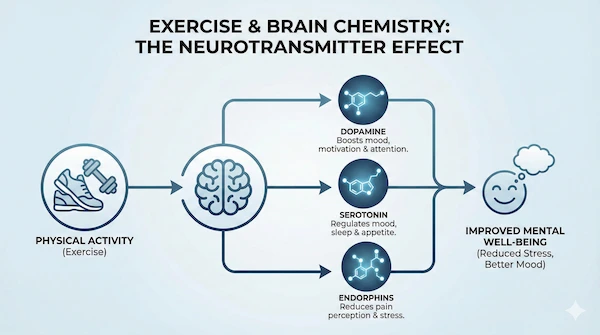
Physical activity can play an important role in supporting mental well-being and stress management. Regular movement may provide opportunities for relaxation, social interaction, achievement, and improved mood.
- The Science: Appropriate physical activity can support psychological well-being through several pathways, including physiological responses, social interaction, and improved confidence and self-efficacy. Physical Education can help students understand how to participate in physical activity safely and consistently as part of a healthy lifestyle.
7. Professional Scope: Beyond the Playground
A background in Physical Education can open pathways into a variety of careers across education, coaching, fitness, sports science, wellness, and sports management. The opportunities can extend well beyond the traditional role of a Physical Education teacher.
Some examples include:
Sports Performance Analyst: Using performance data, video analysis, and sports science principles to help athletes understand and improve aspects of their performance.
Kinesiotherapy and Movement-Based Roles: Working in fields related to movement, exercise, rehabilitation, and functional recovery, depending on professional qualifications and local regulations.
Corporate Wellness Professional: Helping organizations develop workplace wellness and physical activity programmes that encourage healthier lifestyles among employees.
Sports Psychologist: A specialized profession focused on psychological factors related to sports performance, motivation, confidence, and athlete well-being. This career requires specific professional education and qualifications.
These and other career pathways are explored in more detail in our guide to career opportunities in Physical Education.
Real-Life Example: A physiotherapist working with a runner recovering from an ankle injury may use appropriate rehabilitation principles, including a gradual return to movement and loading. This example shows how movement science, exercise, rehabilitation, and sports-related knowledge can work together across different professional fields.
8. Conclusion: The Foundation of an Active Life
Physical Education is more than a subject focused on sports and games. It is an educational process that can help people develop physical competence, health awareness, confidence, social skills, and positive lifelong activity habits.
From understanding the meaning of Physical Education to applying principles of sports science, the knowledge gained through PE can help individuals make more informed decisions about movement, fitness, health, and active living.
At FitEduHub, our aim is to make these concepts easier to understand and apply. Whether you are learning about exercise, participating in sports, training for performance, or simply trying to become more active, understanding the principles behind movement can help you move with purpose and knowledge.
Expert Tips
- The Movement Break Principle: If you spend long periods sitting, include regular movement breaks throughout the day. Simple activities such as walking, standing, shoulder movements, or gentle mobility exercises can help reduce prolonged sedentary time.
- Teach to Learn: One effective way to reinforce your understanding of Physical Education concepts is to explain them to someone else. Try explaining the difference between Physical Activity and Physical Education to a friend or student. Teaching a concept can help reinforce your own understanding.
Frequently Asked Questions (FAQs)
1. What is the literal meaning of Physical Education?
Physical Education combines the concepts of physical development and education. In practical terms, it refers to an educational process that uses physical activity and movement experiences to develop physical fitness, movement skills, health awareness, and other aspects of personal development.
2. How do experts define Physical Education?
Different scholars and professional bodies have described Physical Education from different perspectives. Some definitions emphasize physical activities and the development of the body, while others focus on the broader educational development of the individual. For example, H.C. Buck emphasizes physical activities that develop and maintain the human body, while J.F. Williams highlights the selection and organization of physical activities according to intended outcomes.
3. Is Physical Education different from Physical Activity?
Yes. Physical activity refers to any bodily movement that requires energy expenditure, such as walking, cycling, or playing a sport. Physical Education is a structured educational process that uses physical activity and movement experiences to achieve specific learning and developmental outcomes.
4. Why is PE considered “holistic” development?
It is called holistic because Physical Education supports more than physical fitness alone. It can contribute to four interconnected areas of development: Physical (fitness and movement abilities), Cognitive (thinking, decision-making, and strategy), Social (teamwork and communication), and Affective (emotions, attitudes, motivation, and self-regulation).
5. Can PE help with academic performance?
Physical Education can support learning and overall student well-being. Regular physical activity is associated with benefits for areas such as attention, executive function, and cognitive health. PE also provides opportunities to develop discipline, decision-making, and self-management skills. However, academic outcomes can depend on many factors, so PE should be viewed as a complement to academic learning rather than a guaranteed way to improve grades.
6. What are the modern career options in this field?
A background in Physical Education can lead to a variety of careers beyond the traditional role of a PE teacher. Depending on qualifications and local professional requirements, career pathways may include Sports Performance Analyst, Kinesiotherapy and movement-based roles, Corporate Wellness Professional, and Sports Psychologist. These fields combine knowledge of movement, exercise, sports science, health, and human performance.