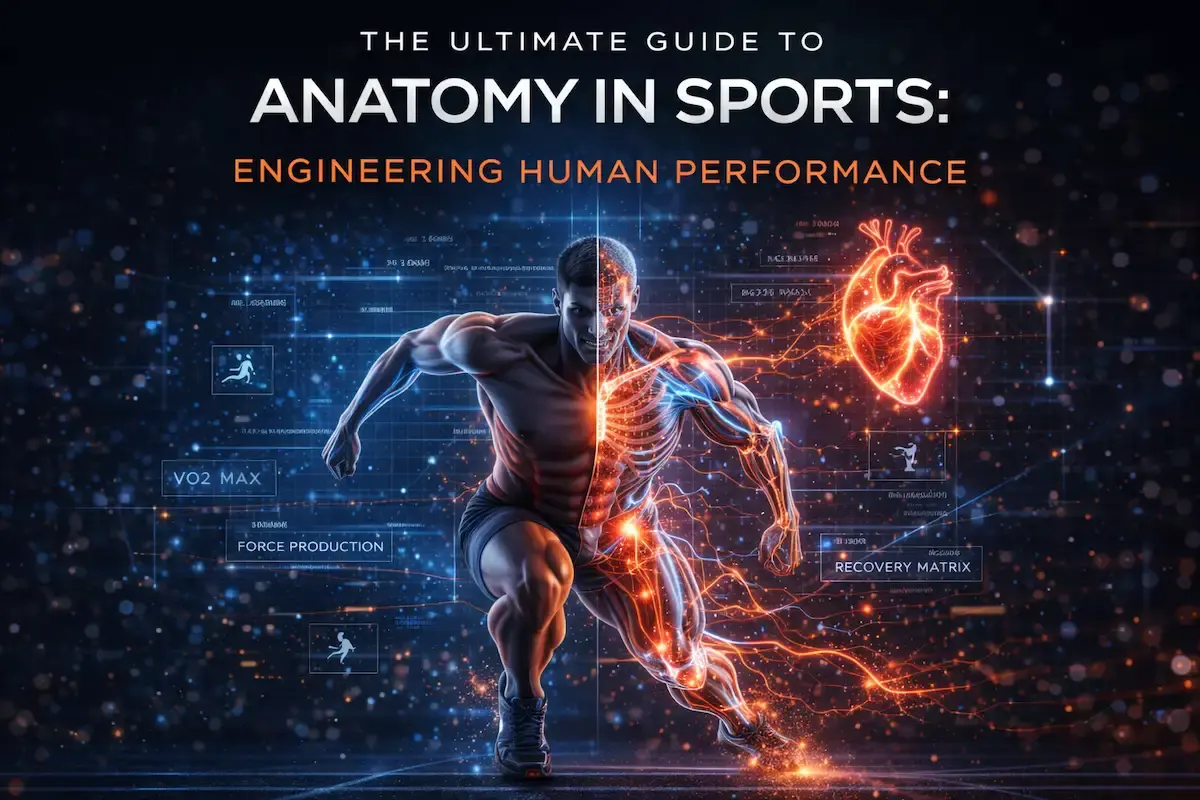
In the modern era of athletics, raw talent is no longer enough to win championships. The secret to breaking records, extending athletic longevity, and maximizing physical potential lies hidden beneath the skin. To truly excel, athletes, coaches, and students must master the deep science of Anatomy in Sports.
While the Meaning & Definition of Physical Education provides the philosophical foundation of human movement, sports anatomy provides the mechanical blueprint. It is a core pillar of What is Sports Science, focusing not just on identifying body parts, but on understanding how the muscular, skeletal, and neurological systems synchronize under extreme physical stress.
In this comprehensive guide, we will move past basic biology and dive deep into the microscopic, biomechanical, and pathological systems that engineer elite human performance.
The Microscopic Engine & Structural Foundation
The human body in motion is a marvel of biological engineering. To understand how to optimize movement, we must first examine the structures that create it.
The Sliding Filament Theory of Muscle Contraction
The muscular system does not just move the body; it is a highly complex engine that converts chemical energy into explosive mechanical force. But how does a muscle actually generate force to lift a barbell or kick a football? The answer lies in the Sliding Filament Theory.
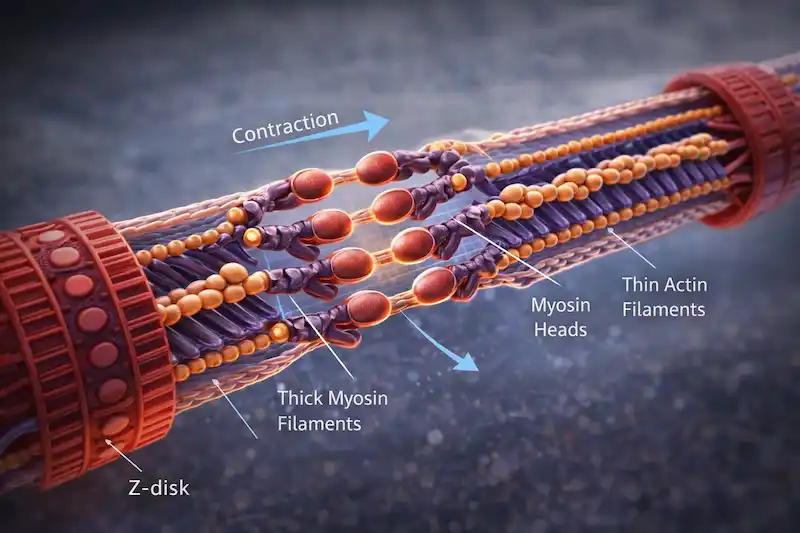
Deep inside your muscle fibers are thousands of microscopic thread-like proteins called Actin (thin filaments) and Myosin (thick filaments).
-
When your brain signals a muscle to move, calcium ions flood the muscle cell.
-
This allows the Myosin “heads” to bind to the Actin filaments.
-
Using ATP (cellular energy), the Myosin pulls the Actin inward.
-
This microscopic sliding shortens the entire muscle fiber, creating a powerful contraction.
Muscle Fiber Typology: The Athlete’s Genetic Blueprint
Not all muscles are created equal. An athlete’s natural sporting ability is heavily dictated by their genetic ratio of muscle fibers. Understanding this is critical when designing Training Methods and strength programs.
-
Type I (Slow-Twitch Oxidative): These fibers are dense with mitochondria (the cell’s powerhouse) and rely on oxygen to create energy. They produce low force but have immense endurance.
-
Type IIa (Fast-Twitch Oxidative-Glycolytic): The “hybrid” fibers. They produce high force rapidly but can also utilize oxygen to sustain effort for moderate periods.
-
Type IIb/IIx (Fast-Twitch Glycolytic): The pure explosive fibers. They generate maximum, violent force instantly but fatigue within seconds. They are the primary target for Strength Training and Speed & Agility drills.
The Neuromuscular Junction (The Mind-Muscle Connection)
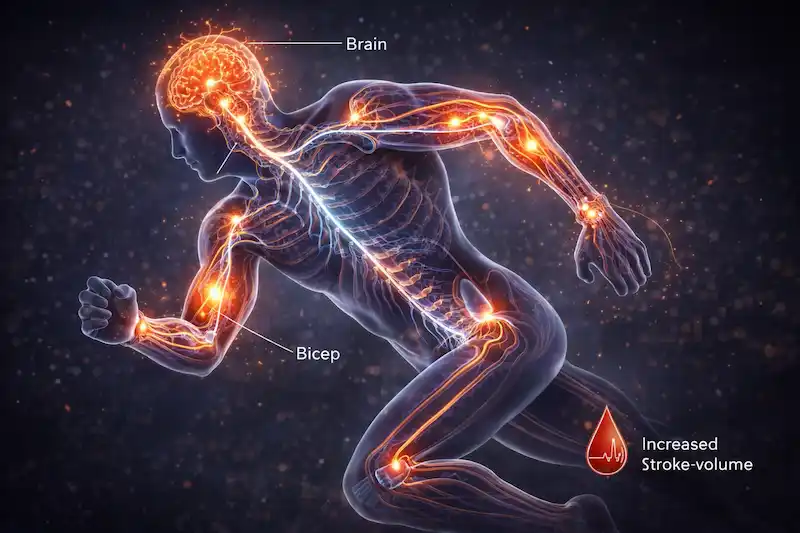
A muscle cannot contract without a command. The Neuromuscular Junction is the exact point where the nervous system connects to the muscle fiber. Elite athletes don’t just have bigger muscles; they have highly efficient nervous systems that can recruit thousands of motor units simultaneously for maximum power output.
Wolff’s Law and Bone Remodeling
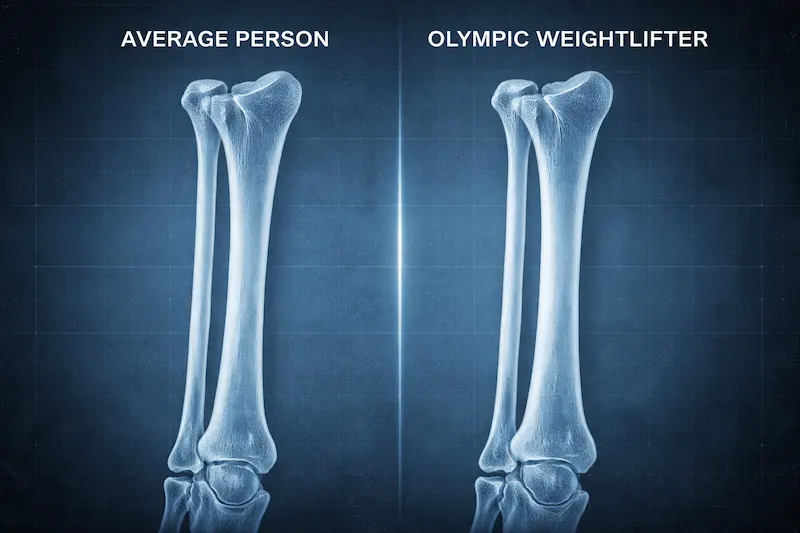
If the muscular system is the engine, the skeletal system is the rigid chassis. A common misconception is that bones are dead, static structures. In reality, they are highly dynamic. Wolff’s Law dictates that bone tissue will adapt, grow, and remodel itself based on the physical stress placed upon it.
Anatomical Levers in Sports Biomechanics
The human body operates using the laws of physics, specifically utilizing three classes of levers to create motion:
-
First-Class Lever (Balance): The pivot point (fulcrum) is in the middle (e.g., the joint at the top of the neck balancing the skull).
-
Second-Class Lever (Pure Power): The load is in the middle (e.g., standing on your tiptoes/calf raises). This provides massive power but low speed.
-
Third-Class Lever (Speed & Range): The force is applied in the middle (e.g., performing a bicep curl). The human body is overwhelmingly made of third-class levers. We naturally sacrifice absolute raw power in exchange for high speed and a massive range of motion. Bioenergetics, Cardiovascular & Nervous Systems
Having an engine and a chassis means nothing without fuel and a control center.
The Three Energy Systems of Sports
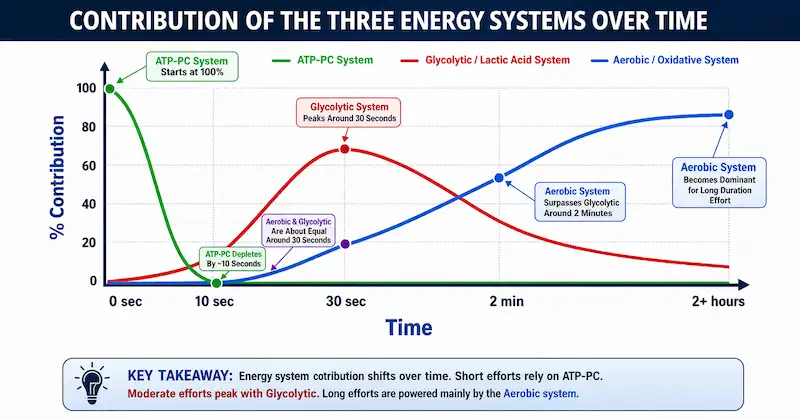
In sports anatomy, we study “Bioenergetics”—the process by which the body converts food into the usable energy molecule called ATP (Adenosine Triphosphate).
-
The ATP-PC System (Phosphagen System): Lasts 0 to 10 seconds. It requires no oxygen and produces zero lactic acid. It provides instant, explosive energy for a 100m sprint or an Olympic lift.
-
The Glycolytic System (Lactic Acid System): Lasts 10 seconds to 2 minutes. The body breaks down stored carbohydrates without oxygen. The byproduct is lactic acid, causing muscle burn. Optimizing this system heavily relies on proper Health & Nutrition.
-
The Aerobic System (Oxidative System): Lasts from 2 minutes to several hours. Uses oxygen to generate massive amounts of ATP. This is the foundation of Endurance Training.
Cardiac Hypertrophy (The Athlete’s Heart)
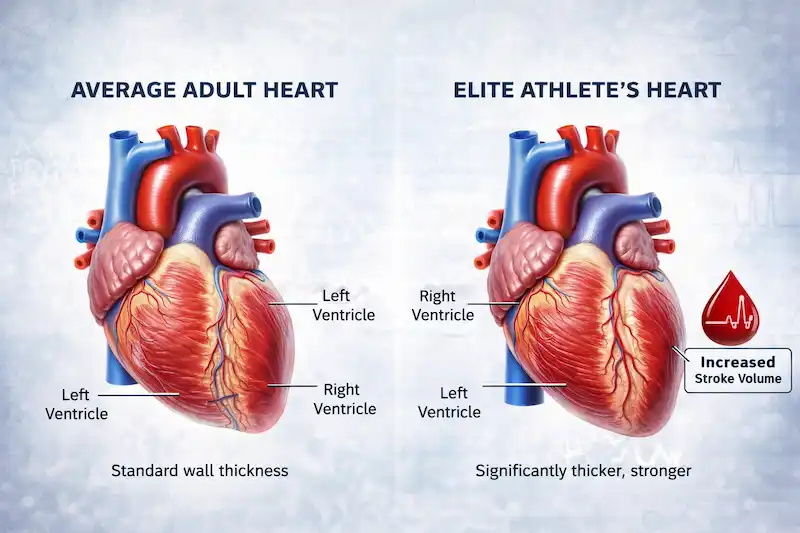
To sustain the Aerobic energy system, the cardiovascular system must adapt. Intense training physically enlarges the heart muscle—a condition known as Athletic Cardiac Hypertrophy.
-
Stroke Volume: An elite athlete’s enlarged heart has a massive stroke volume, meaning it pumps significantly more blood with a single beat.
-
Resting Heart Rate (RHR): Because of this efficiency, an elite endurance athlete might have a resting heart rate of 30-40 bpm, compared to the average 60-80 bpm.
Proprioception and CNS Fatigue
The Nervous System provides ultimate control. Proprioception is your body’s subconscious, built-in GPS. It is the ability to sense the exact position, speed, and tension of your limbs in space without looking at them.
When we talk about “exhaustion,” we must also consider Central Nervous System (CNS) Fatigue. After a brutal workout, the brain and spinal cord temporarily lose their ability to send strong electrical impulses. Your muscles might have fuel left, but the “wiring” is exhausted. This is why strict Recovery & Sleep protocols are vital.
Deep Pathology, Injury Prevention & Recovery Science
Pushing the human body to its limits inevitably invites the risk of structural failure. Understanding the deep pathology of sports injuries is what separates a good athlete from an elite professional.
Microtrauma vs. Macrotrauma
-
Microtrauma: The microscopic cellular damage that occurs during regular training. This is a positive stress. When the body repairs microtraumas, the tissue becomes stronger and denser.
-
Macrotrauma: A sudden, catastrophic structural failure, such as a snapped Achilles tendon or a fractured collarbone.
Sprains, Strains, and DOMS
Understanding the exact anatomical definitions of injuries is crucial for treatment:
-
Sprain: The overstretching or tearing of a Ligament (the tissue that connects bone to bone). Example: An ankle sprain or an ACL tear in the knee.
-
Strain: The overstretching or tearing of a Muscle or Tendon (the tissue connecting muscle to bone). Example: A pulled hamstring.
-
DOMS (Delayed Onset Muscle Soreness): Often incorrectly blamed on lactic acid build-up. DOMS is actually the physical pain caused by microscopic muscle tears (microtrauma) and the resulting inflammatory repair process, usually peaking 24 to 48 hours after heavy exercise.
Modern Recovery: Beyond R.I.C.E to P.O.L.I.C.E
For decades, the standard protocol for sports injuries was R.I.C.E (Rest, Ice, Compression, Elevation). However, modern sports science has evolved based on deeper anatomical understanding.
Prolonged rest actually weakens healing tissues. The new standard is P.O.L.I.C.E:
-
Protection
-
Optimal Loading (Gently moving the injured area to stimulate blood flow and align repairing collagen fibers)
-
Ice
-
Compression
-
Elevation
Anatomy and Long-Term Health
The benefits of understanding sports anatomy extend far beyond the playing field. Proper biomechanics and regular physical activity are the frontline defense against metabolic syndromes. By applying anatomical knowledge to daily life, individuals can actively work towards Lifestyle Diseases & Prevention, combating issues like osteoporosis, obesity, and hypertension.
Furthermore, mastering these concepts opens up lucrative and highly respected Career Options after ranging from clinical biomechanists to elite strength and conditioning coaches.
Conclusion
Anatomy in sports transcends basic biology. It is the sophisticated convergence of biomechanics, neurology, and physiology.
When an athlete, coach, or physical education professional deeply understands muscle fiber recruitment, the physics of anatomical levers, the bioenergetics of fueling, and the neurological reflexes that govern movement, they stop guessing. They begin engineering performance. Mastering this deep knowledge is what fulfills the ultimate Purpose & Objectives of physical education.
❓ Frequently Asked Questions (FAQs)
Q1. What is the difference between Hypertrophy and Hyperplasia? Hypertrophy is the increase in the size of existing muscle fibers due to training. Hyperplasia is an increase in the number of muscle fibers, a phenomenon common in animals but highly debated in human sports science.
Q2. How do Tendons and Ligaments heal compared to Muscles? Muscles have a massive blood supply (highly vascular), so they heal relatively quickly. Tendons and ligaments have a very poor blood supply (avascular), meaning strains and sprains take significantly longer to repair anatomically.
Q3. What role does the Central Nervous System (CNS) play in fatigue? Athletic fatigue isn’t just in the muscles. CNS Fatigue occurs when the brain and spinal cord temporarily lose the ability to send strong electrical signals to the muscles, reducing power output even if the muscle itself isn’t fully exhausted.
Q4. Can an athlete change their muscle fiber types? To a small degree, yes. While genetics dictate the baseline, intense endurance training can cause some Type II (fast) fibers to act more like Type I (slow) fibers, a process known as fiber type shifting.
Q5. Why is “Optimal Loading” better than complete rest for sports injuries? Complete rest causes repairing tissues to heal in disorganized clumps. Optimal loading (gentle, controlled movement) signals the body to lay down new collagen fibers in straight, strong lines parallel to the muscle, resulting in a stronger, more flexible repair.