
Topic 1: Balanced Diet and Nutrition: Meaning and Importance
1. What is a Balanced Diet?
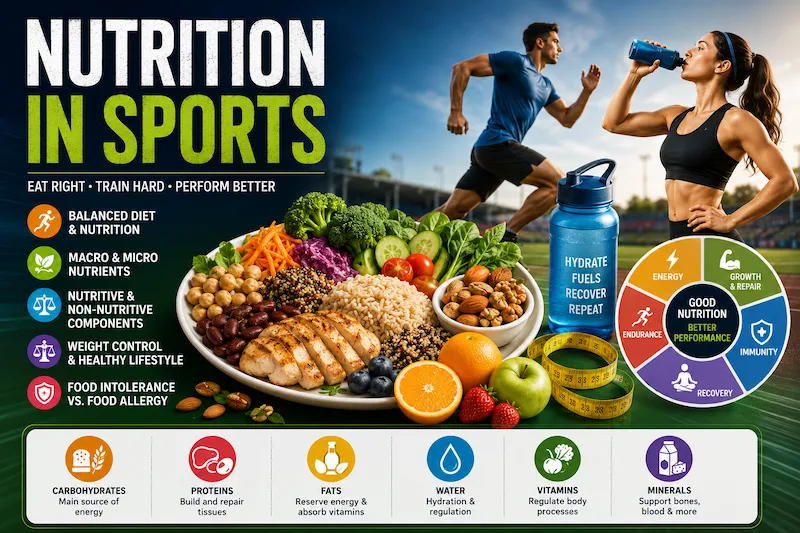
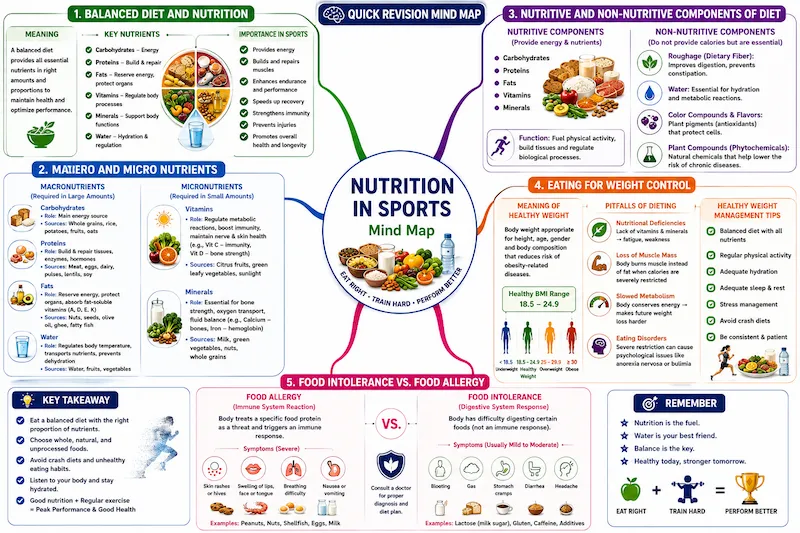
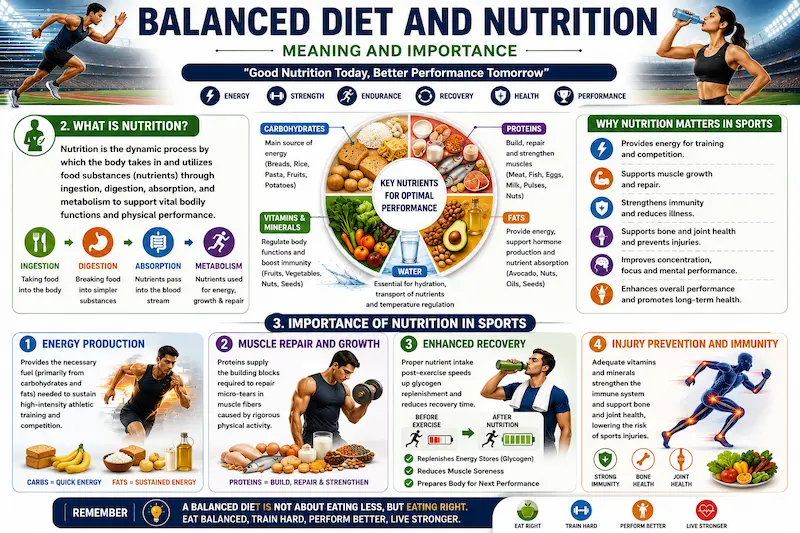
A Balanced Diet is defined as a diet that contains an adequate quantity of all the essential nutrients—such as carbohydrates, proteins, fats, vitamins, minerals, and water—in the correct proportions required by the human body to maintain optimal health, growth, and energy.
2. What is Nutrition?
Nutrition is the dynamic process by which the body takes in and utilizes food substances (nutrients) through ingestion, digestion, absorption, and metabolism to support vital bodily functions and physical performance.
3. Importance of Nutrition in Sports
- Energy Production: Provides the necessary fuel (primarily from carbohydrates and fats) needed to sustain high-intensity athletic training and competition.
- Muscle Repair and Growth: Proteins supply the building blocks required to repair micro-tears in muscle fibers caused by rigorous physical activity.
- Enhanced Recovery: Proper nutrient intake post-exercise speeds up glycogen replenishment and reduces recovery time.
- Injury Prevention and Immunity: Adequate vitamins and minerals strengthen the immune system and support bone and joint health, lowering the risk of sports injuries.
Topic 2: Macro and Micro Nutrients: Meaning and Functions
Nutrients are broadly divided into two main categories based on the quantities required by the body:
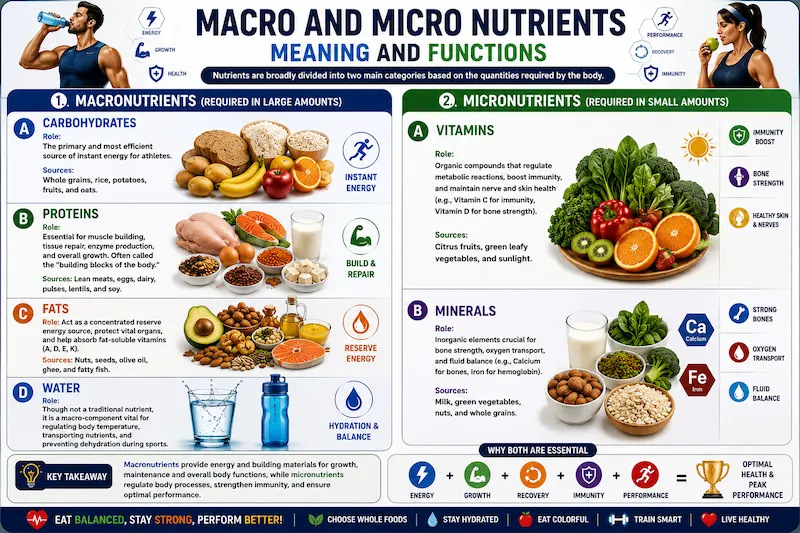
1. Macronutrients (Required in Large Amounts)
- A. Carbohydrates:
- Role: The primary and most efficient source of instant energy for athletes.
- Sources: Whole grains, rice, potatoes, fruits, and oats.
- B. Proteins:
- Role: Essential for muscle building, tissue repair, enzyme production, and overall growth. Often called the “building blocks of the body.”
- Sources: Lean meats, eggs, dairy, pulses, lentils, and soy.
- C. Fats:
- Role: Act as a concentrated reserve energy source, protect vital organs, and help absorb fat-soluble vitamins (A, D, E, K).
- Sources: Nuts, seeds, olive oil, ghee, and fatty fish.
- D. Water:
- Role: Though not a traditional nutrient, it is a macro-component vital for regulating body temperature, transporting nutrients, and preventing dehydration during sports.
2. Micronutrients (Required in Small Amounts)
- A. Vitamins:
- Role: Organic compounds that regulate metabolic reactions, boost immunity, and maintain nerve and skin health (e.g., Vitamin C for immunity, Vitamin D for bone strength).
- Sources: Citrus fruits, green leafy vegetables, and sunlight.
- B. Minerals:
- Role: Inorganic elements crucial for bone strength, oxygen transport, and fluid balance (e.g., Calcium for bones, Iron for hemoglobin).
- Sources: Milk, green vegetables, nuts, and whole grains.
Topic 3: Nutritive and Non-Nutritive Components of Diet
1. Nutritive Components of Diet
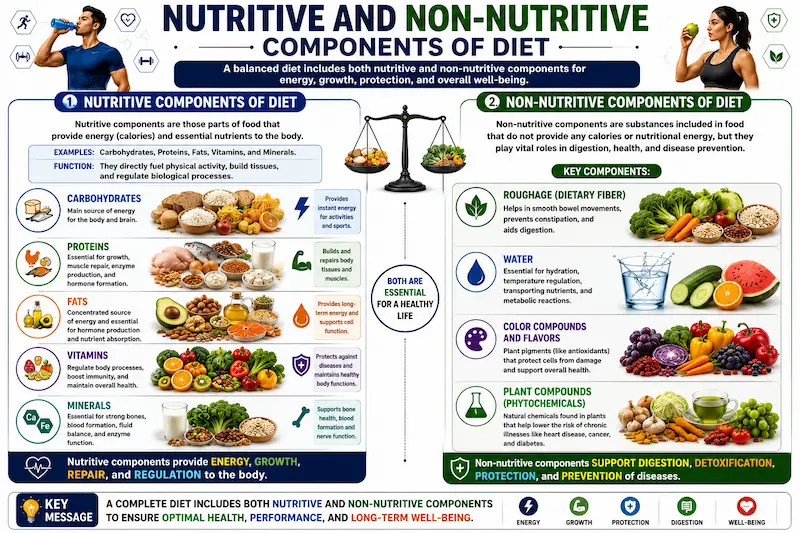
Nutritive components are those parts of food that provide energy (calories) and essential nutrients to the body.
- Examples: Carbohydrates, Proteins, Fats, Vitamins, and Minerals.
- Function: They directly fuel physical activity, build tissues, and regulate biological processes.
2. Non-Nutritive Components of Diet
Non-nutritive components are substances included in food that do not provide any calories or nutritional energy, but they play vital roles in digestion, health, and disease prevention.
- Key Components:
- Roughage (Dietary Fiber): Helps in smooth bowel movements, prevents constipation, and aids digestion.
- Water: Essential for hydration and metabolic reactions.
- Color Compounds and Flavors: Plant pigments (like antioxidants) that protect cells from damage.
- Plant Compounds (Phytochemicals): Natural chemicals found in plants that help lower the risk of chronic illnesses.
Topic 4: Eating for Weight Control: Meaning of Healthy Weight, Pitfalls of Dieting, and Food Intolerance
1. Meaning of Healthy Weight
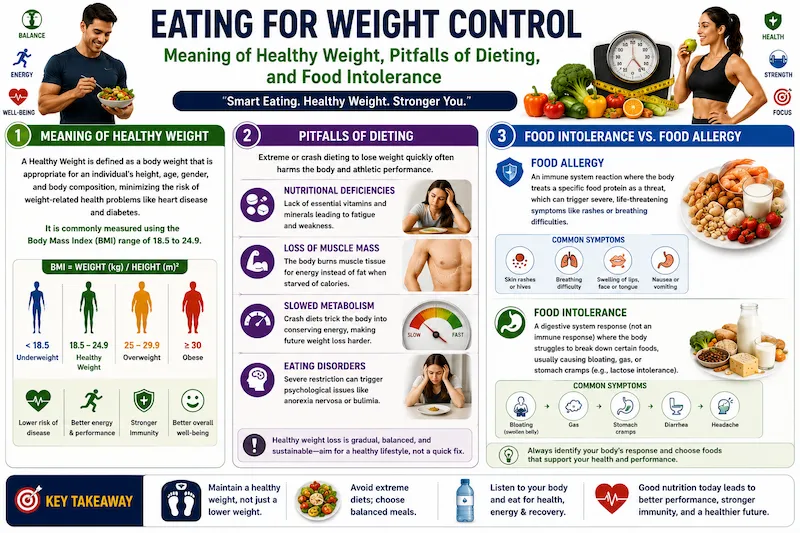
A Healthy Weight is defined as a body weight that is appropriate for an individual’s height, age, gender, and body composition, minimizing the risk of weight-related health problems like heart disease and diabetes. It is commonly measured using the Body Mass Index (BMI) range of 18.5 to 24.9.
2. Pitfalls of Dieting
Extreme or crash dieting to lose weight quickly often harms the body and athletic performance. Major pitfalls include:
- Nutritional Deficiencies: Lack of essential vitamins and minerals leading to fatigue and weakness.
- Loss of Muscle Mass: The body burns muscle tissue for energy instead of fat when starved of calories.
- Slowed Metabolism: Crash diets trick the body into conserving energy, making future weight loss harder.
- Eating Disorders: Severe restriction can trigger psychological issues like anorexia nervosa or bulimia.
3. Food Intolerance vs. Food Allergy
Food Allergy: An immune system reaction where the body treats a specific food protein as a threat, which can trigger severe, life-threatening symptoms like rashes or breathing difficulties.
Food Intolerance: A digestive system response (not an immune response) where the body struggles to break down certain foods, usually causing bloating, gas, or stomach cramps (e.g., lactose intolerance).
Chapter Conclusion: Sports and Nutrition
This chapter emphasizes the critical relationship between diet and sports performance. A Balanced Diet provides the right proportion of Macronutrients (Carbohydrates, Proteins, Fats) for energy and muscle building, and Micronutrients (Vitamins, Minerals) for disease prevention and body regulation. It distinguishes between nutritive and non-nutritive (like water and roughage) components of a diet. Furthermore, the chapter tackles modern lifestyle issues by discussing weight management through BMI (Body Mass Index), highlighting the dangerous Pitfalls of Dieting, and busting common Food Myths to guide students toward healthy and sustainable eating habits.
Frequently Asked Questions (FAQs)
Objective Type Questions (1 Mark)
Q1. Which of the following is considered a Macronutrient? +
Ans. C) Proteins
Q2. Vitamins A, D, E, and K belong to which category? +
Ans. B) Fat-soluble vitamins
Q3. What is the correct formula to calculate BMI (Body Mass Index)? +
Ans. B) Weight (in kg) / Height² (in m²)
Q4. Which of these is a Non-Nutritive component of diet? +
Ans. B) Roughage (Fiber)
Q5. A BMI score of 27.5 falls into which category? +
Ans. C) Overweight (Normal is 18.5 to 24.9, Overweight is 25 to 29.9)
Very Short Answer Type Questions (2 Marks)
Q6. Define a Balanced Diet. +
Ans. A balanced diet is one that contains all the essential nutrients—carbohydrates, proteins, fats, vitamins, minerals, and water—in the correct quantities and proportions required for the proper growth, maintenance, and functioning of the body.
Q7. What is the difference between Macronutrients and Micronutrients? +
Ans. Macronutrients (Carbohydrates, Proteins, Fats) are required by the body in large amounts and primarily provide energy and structural building blocks. Micronutrients (Vitamins, Minerals) are required in very small amounts but are crucial for regulating bodily functions and preventing diseases.
Q8. What do you understand by Food Intolerance? +
Ans. Food intolerance occurs when a person has difficulty digesting a particular food or food additive. Unlike a food allergy, it does not involve the immune system but rather the digestive system, leading to symptoms like bloating, stomach pain, or nausea (e.g., Lactose Intolerance).
Q9. Mention any two food myths. +
Ans. Two common food myths are:
- Myth: Starving yourself is the best way to lose weight. (Fact: It slows down metabolism and leads to muscle loss).
- Myth: Eating carbohydrates makes you fat. (Fact: Excess calories make you fat, not carbs alone, as they are the primary source of energy).
Short Answer Type Questions (3 Marks)
Q10. Explain any three Pitfalls of Dieting. +
Ans. Pitfalls of dieting refer to the negative health consequences of crash diets or extreme calorie restriction:
- Extreme Reduction of Calories: Drastically cutting calories drops the body’s metabolic rate, meaning the body burns fewer calories, which ultimately stalls weight loss.
- Loss of Muscle Mass: Instead of burning fat, severe dieting forces the body to break down muscle tissue for energy, making the person physically weak.
- Nutritional Deficiencies: Skipping meals or eliminating entire food groups deprives the body of essential vitamins and minerals, leading to issues like anemia, hair fall, and poor immunity.
Q11. Discuss the role of any three non-nutritive components of a diet. +
Ans. Non-nutritive components do not provide energy (calories) but are essential for the body:
- Water: Makes up about 60-70% of body weight. It regulates body temperature, aids in digestion, and transports nutrients and waste throughout the body.
- Roughage (Fiber): It adds bulk to the food, preventing constipation and ensuring smooth bowel movements. It also helps in keeping the stomach full, aiding weight management.
- Artificial Sweeteners/Color compounds: Used to enhance the taste and visual appeal of food. While they make food appetizing, excess consumption should be avoided.
Q12. Classify Vitamins. Differentiate between them with examples. +
Ans. Vitamins are complex organic compounds vital for health, classified into two types:
- Fat-Soluble Vitamins (A, D, E, K): These vitamins dissolve in fats. They are stored in the body’s fatty tissue and liver for future use. (e.g., Vitamin D helps in calcium absorption for strong bones).
- Water-Soluble Vitamins (B-complex, C): These vitamins dissolve in water. The body cannot store them (except B12), and excess is excreted through urine. Therefore, they need to be consumed regularly. (e.g., Vitamin C boosts the immune system).
Q13. How does Diet impact sports performance? +
Ans. A proper diet is the fuel for sports performance. Carbohydrates provide the immediate energy required for high-intensity training. Proteins repair muscle tissues damaged during workouts and build new muscle mass. Furthermore, adequate hydration (water) delays fatigue, prevents cramps, and maintains focus, allowing the athlete to perform at their peak for a longer duration.
Long Answer Type Questions (5 Marks)
Q14. Elaborate on Macronutrients and their role in the human body. +
Ans. Macronutrients are nutrients that the body needs in large quantities to produce energy, build tissues, and maintain overall health. The three main macronutrients are:
- Carbohydrates: They are the body’s main and most efficient source of energy. During digestion, carbs are broken down into glucose, which fuels the brain and muscles. Athletes require high carb intake for endurance. Sources: Wheat, rice, potatoes, bananas.
- Proteins: Known as the building blocks of the body, proteins are essential for the growth, repair, and maintenance of muscle tissues, skin, and organs. They also produce enzymes and hormones. Sources: Eggs, meat, fish, soybeans, pulses, dairy products.
- Fats: Fats provide a highly concentrated source of energy (providing double the energy of carbs per gram). They protect internal organs, provide insulation to keep the body warm, and are essential for absorbing fat-soluble vitamins (A, D, E, K). Sources: Butter, ghee, nuts, oils, cheese.
Q15. What do you mean by a Healthy Weight? Discuss the methods to control healthy weight. +
Ans. Healthy Weight: A healthy weight is a body weight that lowers the risk of health issues like heart disease, diabetes, and stroke. It is scientifically evaluated using the Body Mass Index (BMI), where a score between 18.5 and 24.9 indicates a healthy weight.
Methods to Control Healthy Weight:
- Balanced Diet: Focus on nutrient-dense foods rather than calorie-dense foods. Eat plenty of fruits, vegetables, whole grains, and lean proteins while avoiding junk food.
- Regular Physical Activity: Engage in at least 45-60 minutes of moderate to vigorous exercise daily (like jogging, swimming, or cycling) to burn excess calories and boost metabolism.
- Avoid Skipping Meals: Skipping meals leads to severe hunger, causing overeating in the next meal. Eating small, frequent meals keeps the metabolism active.
- Proper Hydration: Drinking plenty of water aids digestion and can prevent overeating by keeping the stomach full.
- Avoid Extreme Dieting (Crash Diets): Do not starve yourself. Weight loss should be a gradual, sustainable process through lifestyle changes, not sudden starvation.
Q16. What are Minerals? Differentiate between Macro and Micro minerals with two examples of each. +
Ans. Minerals: Minerals are inorganic elements that originate from the soil and water. They are critical micronutrients required for bone health, fluid balance, muscle contractions, and nerve impulse transmission. They are divided into two categories:
1. Macro Minerals: These are minerals that the body needs in relatively larger amounts (more than 100 mg/day).
- Calcium: Essential for the formation and strengthening of bones and teeth, and for blood clotting. (Found in milk, cheese).
- Sodium: Helps regulate the body’s water balance and transmits nerve signals. (Found in table salt, pickles).
2. Micro Minerals (Trace Minerals): These are required by the body in very small amounts (less than 100 mg/day), but their deficiency can cause severe health issues.
- Iron: Crucial for the formation of Hemoglobin in red blood cells, which carries oxygen throughout the body. Deficiency causes Anemia. (Found in spinach, red meat, apple).
- Iodine: Essential for the proper functioning of the thyroid gland. Deficiency leads to Goiter. (Found in iodized salt, seafood).
Q17. Explain the Nutritive and Non-Nutritive components of diet in detail. +
Ans. A diet comprises both nutritive and non-nutritive components, both of which are essential for survival and optimal health.
Nutritive Components: These components provide calories (energy) or act as building blocks for the body.
- Carbohydrates & Fats: Provide the fuel and stored energy necessary for daily activities and workouts.
- Proteins: Build and repair muscle fibers and tissues.
- Vitamins & Minerals: Though they don’t provide energy, they are vital nutritive components that regulate metabolism, bone health, and the immune system.
Non-Nutritive Components: These components do not provide any energy (zero calories) or nutritional value, but are crucial for physiological functions.
- Water: Essential for hydration, blood circulation, and regulating body temperature through sweating.
- Roughage (Dietary Fiber): The indigestible part of plant foods. It adds bulk to feces, preventing constipation and intestinal disorders.
- Color and Flavor Compounds: Found naturally in fruits/vegetables (or added artificially) to make the food look visually appealing and taste good, which stimulates digestive enzymes.