
Introduction: Physiology and Sports Safety
Sports physiology is the scientific study of how the human body functions, adapts, and responds during acute and chronic physical exercise. Every athlete possesses a unique physiological makeup dictated by genetics and enhanced by rigorous training. Understanding these internal mechanisms is crucial for coaches and athletes to optimize the core components of physical fitness—Strength, Speed, Endurance, and Flexibility. Furthermore, pushing the body to its physical limits inherently carries the risk of tissue damage. Therefore, a deep understanding of physiological adaptations must be paired with the knowledge of sports injuries, their classification, and immediate medical management to ensure long-term athletic health and peak performance.
Topic 1: Physiological Factors Determining Components of Physical Fitness
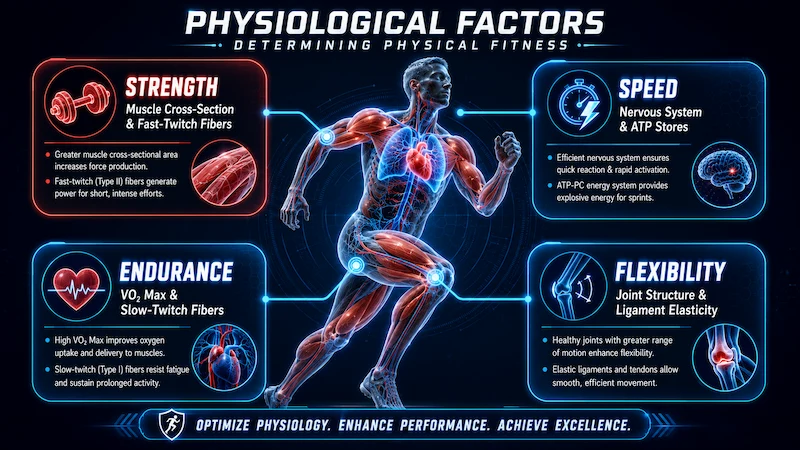
The core components of physical fitness are not just physical skills you learn on the field; they are heavily determined by internal physiological factors ranging from muscle fiber types to oxygen-carrying capacity.
1. Physiological Factors Determining Strength
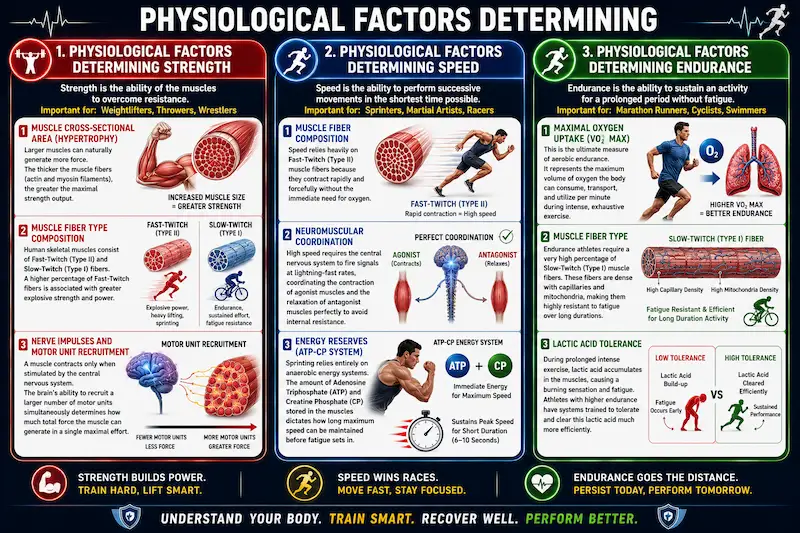
Strength is the ability of the muscles to overcome resistance. A weightlifter, thrower, or wrestler relies heavily on the following internal factors:
- Muscle Cross-Sectional Area (Hypertrophy): Larger muscles can naturally generate more force. The thicker the individual muscle fibers (actin and myosin filaments), the greater the maximal strength output an athlete can produce.
- Muscle Fiber Type Composition: Human skeletal muscles consist of Fast-Twitch (Type II) and Slow-Twitch (Type I) fibers. Individuals born with a genetically higher percentage of Fast-Twitch fibers possess naturally greater explosive strength and power, making them ideal for heavy lifting and sprinting.
- Nerve Impulses and Motor Unit Recruitment: A muscle contracts only when stimulated by the central nervous system. The brain’s ability to recruit a larger number of motor units simultaneously determines how much total force the muscle can generate in a single maximal effort.
2. Physiological Factors Determining Speed
Speed is the ability to perform successive movements in the shortest time possible, which is crucial for sprinters and martial artists.
- Muscle Fiber Composition: Just like strength, speed relies heavily on Fast-Twitch (Type II) muscle fibers because they contract rapidly and forcefully without the immediate need for oxygen.
- Neuromuscular Coordination: High speed requires the central nervous system to fire signals to the muscles at lightning-fast rates, coordinating the contraction of agonist muscles and the relaxation of antagonist muscles perfectly to avoid internal resistance.
- Energy Reserves (ATP-CP System): Sprinting relies entirely on anaerobic energy systems. The amount of Adenosine Triphosphate (ATP) and Creatine Phosphate (CP) stored directly in the muscles dictates how long maximum speed can be maintained before chemical fatigue sets in.
3. Physiological Factors Determining Endurance
Endurance is the ability to sustain an activity for a prolonged period without fatigue, essential for marathon runners and cyclists.
- Maximal Oxygen Uptake (VO2 max): This is the ultimate measure of aerobic endurance. It represents the maximum volume of oxygen the body can consume, transport, and utilize per minute during intense, exhaustive exercise.
- Muscle Fiber Type: Endurance athletes require a very high percentage of Slow-Twitch (Type I) muscle fibers. These fibers are dense with capillaries and mitochondria, making them highly resistant to fatigue over long durations.
- Lactic Acid Tolerance: During prolonged intense exercise, lactic acid accumulates in the muscles, causing a burning sensation and physical fatigue. Athletes with higher endurance have physiological systems trained to tolerate and clear this lactic acid much more efficiently.
4. Physiological Factors Determining Flexibility
Flexibility refers to the maximum range of motion available at a specific joint.
- Joint Structure: Different types of joints allow different ranges of motion. For example, a ball-and-socket joint (like the shoulder) inherently has a much greater range of motion than a hinge joint (like the knee).
- Stretchability of Muscles and Ligaments: The elasticity of the soft tissues (tendons, ligaments, and muscle fascia) surrounding a joint directly limits or enhances how far that joint can bend safely.
- Internal Core Temperature: Muscles and ligaments become significantly more pliable and elastic when the body’s internal temperature rises. This is the physiological reason why a proper warm-up drastically increases temporary flexibility and prevents muscle tears.
Topic 2: Effect of Exercise on the Muscular System
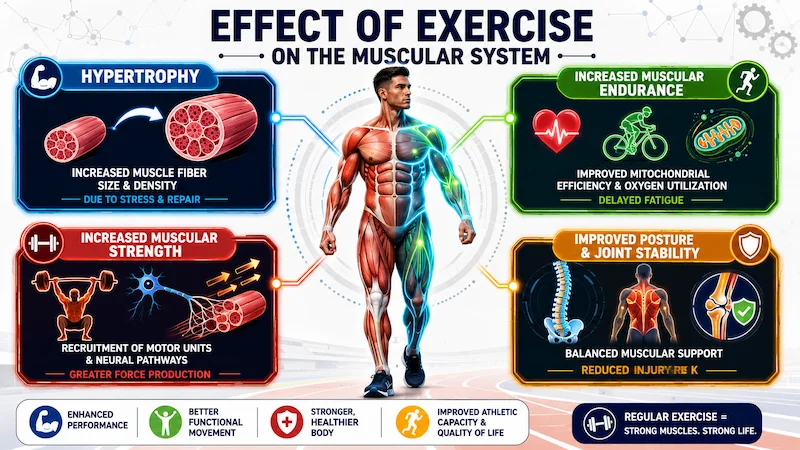
The human muscular system is highly adaptable and responsive. When subjected to the progressive overload of regular physical training, skeletal muscles undergo profound structural, chemical, and functional changes. These physiological adaptations allow the athlete to perform physical tasks with greater ease, power, and efficiency, while significantly delaying the onset of exhaustion.
Key Muscular Adaptations to Training:
- Muscle Hypertrophy (Increase in Muscle Size): Regular strength and resistance training causes microscopic tears in the muscle fibers. When the body repairs these tears during periods of rest and proper nutrition, the fibers grow thicker, denser, and stronger. This visible increase in the cross-sectional area of the muscle is called hypertrophy.
- Increased Capillarization: Aerobic and endurance exercises stimulate the growth of new capillaries (tiny blood vessels) wrapped around the muscle fibers. This denser capillary network ensures a faster, larger, and more efficient delivery of oxygen and essential nutrients to the working muscles while quickly removing metabolic waste.
- Increase in Mitochondria Size and Density: Mitochondria are the microscopic “powerhouses” of the cell where aerobic energy is produced. Long-term endurance training increases both the total number and the physical size of mitochondria within the muscle cells, vastly improving the muscle’s ability to produce continuous energy over long marathons or matches.
- Better Neuromuscular Coordination: Regular, repetitive practice of sports skills improves the communication pathways between the brain and the muscles. Over time, movements become smoother, more mechanically accurate, and require significantly less wasted energy.
- Change in Body Composition: Consistent exercise increases metabolically active lean muscle mass while simultaneously utilizing stored subcutaneous fat for energy. This leads to a toned, athletic physique with a drastically lower overall body fat percentage.
- Delayed Onset of Fatigue: Trained muscles learn to store much higher amounts of muscle glycogen and adapt to clear metabolic waste products (like lactic acid) rapidly. This chemical adaptation allows trained athletes to push harder for longer durations before experiencing muscle failure.
Topic 3: Effect of Exercise on the Cardio-Respiratory System
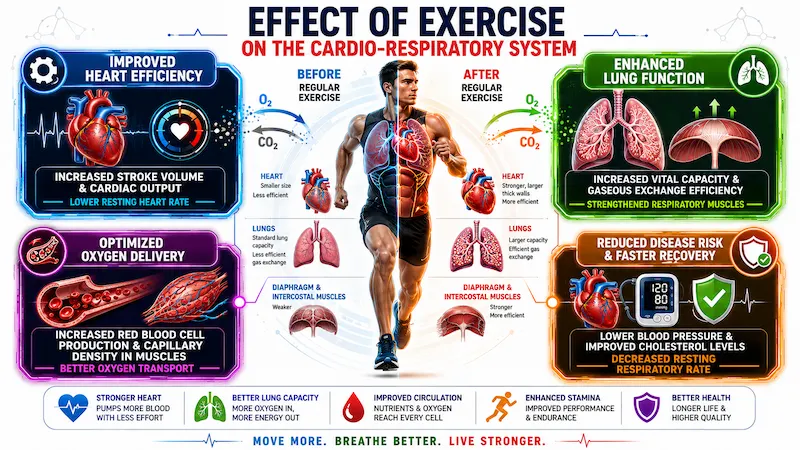
The cardiovascular system (comprising the heart and blood vessels) and the respiratory system (comprising the lungs and airways) work together seamlessly to supply the entire body with oxygen. When an individual engages in regular aerobic exercise over weeks and months, these systems undergo massive transformations, functioning like a highly upgraded biological engine that works effortlessly even under immense competitive stress.
Adaptations of the Cardiovascular System:
- Cardiac Hypertrophy (Athlete’s Heart): Just like skeletal muscles, the heart muscle grows stronger with rigorous exercise. The walls of the heart—specifically the left ventricle, which is responsible for pumping oxygenated blood to the rest of the body—become thicker and significantly stronger.
- Increased Stroke Volume (SV): Stroke volume is defined as the amount of blood pumped by the heart in a single contraction (beat). Because the trained heart is stronger and its chambers can hold slightly more blood, it pumps significantly more blood per beat compared to a non-athlete’s heart.
- Decreased Resting Heart Rate (Bradycardia): Because a trained athlete’s heart pumps more blood per beat (due to higher stroke volume), it simply doesn’t need to beat as often to supply the body’s resting oxygen demands. While a normal resting heart rate is around 70-72 beats per minute, an elite endurance athlete’s resting heart rate can drop as low as 40-50 beats per minute, putting far less wear and tear on the organ over a lifetime.
- Faster Recovery Rate: After an intense workout or sprint, an athlete’s heart rate returns to its normal resting state much faster than a beginner’s, allowing them to recover rapidly between plays or intervals.
Adaptations of the Respiratory System:
- Increased Tidal Volume and Vital Capacity: Tidal volume (the amount of air inhaled/exhaled in a normal, quiet breath) and Vital Capacity (the maximum amount of air a person can exhale after a maximum active inhalation) both increase. The lungs learn to expand more fully, drawing in massive amounts of oxygen with every single breath.
- Strengthening of Respiratory Muscles: The diaphragm and the intercostal muscles (the muscles located between the ribs) become noticeably stronger. This makes the mechanical process of breathing deeper and highly efficient, preventing the feeling of breathlessness or respiratory fatigue during a long race.
- Increase in Alveoli Efficiency: The tiny balloon-like air sacs in the lungs (alveoli) become more efficient at exchanging gases. This ensures that maximum oxygen is pushed into the bloodstream while toxic carbon dioxide is rapidly and effectively expelled.
Topic 4: Sports Injuries – Classification, Causes, and Prevention
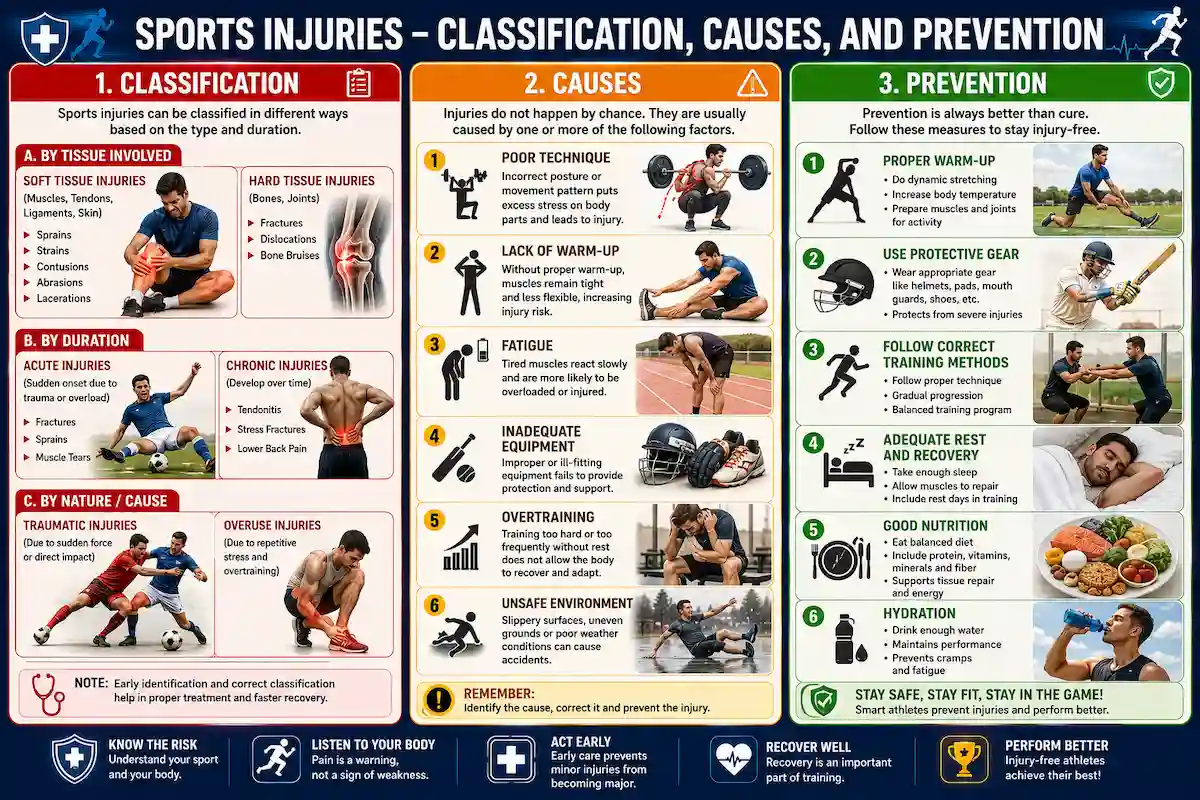
Sports injuries are an unfortunate but inevitable part of athletic participation. They generally occur when the physical stress placed on the body exceeds the biological tissue’s capacity to handle it. Understanding exactly how injuries are classified helps athletes, coaches, and medical staff apply the correct prevention strategies and immediate first aid. Sports injuries are broadly divided into two main categories: Soft Tissue Injuries and Bone & Joint Injuries.
1. Soft Tissue Injuries
These injuries affect the skin, muscles, tendons, and ligaments. They are highly common in contact sports like football and high-intensity athletics.
- Contusion (Bruise): A direct, blunt blow to the body (e.g., getting hit by a cricket ball or colliding with an opponent) causes blood vessels under the skin to break and bleed internally. This leads to blue/purple discoloration and swelling, even though the skin itself is not torn.
- Strain (Muscle/Tendon Injury): Often referred to in sports as a “pulled muscle,” a strain occurs when a muscle or tendon is overstretched or torn violently due to explosive movement. Example: A severe hamstring strain during a 100m sprint.
- Sprain (Ligament Injury): A sprain is the tearing or extreme overstretching of a ligament (the tough, fibrous tissue connecting bone to bone). Example: Rolling or twisting an ankle after landing awkwardly on a basketball court.
- Abrasion: A superficial injury where the outer layers of the skin are violently scraped off due to intense friction against a rough surface, such as a player sliding on a synthetic turf or running track.
- Laceration and Incision: Lacerations are deep, jagged, and irregular cuts caused by blunt trauma, while incisions are clean, sharp cuts often caused by sharp edges (like ice-skating blades or spiked athletic shoes).
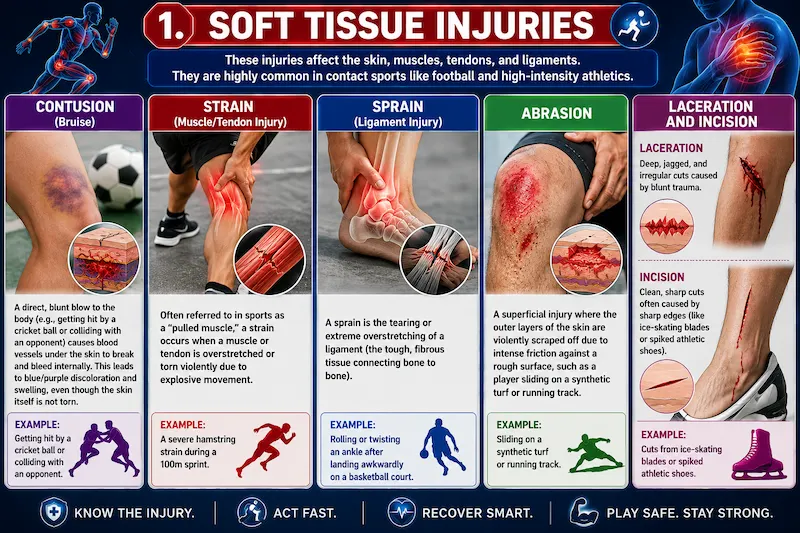
Soft Tissue Sports Injuries: A comprehensive sports science infographic explaining the major types of soft tissue injuries, including contusions, strains, sprains, abrasions, lacerations, and incisions. It highlights their causes, symptoms, and real-world sports examples to help students, athletes, and coaches understand injury identification and prevention.
2. Bone and Joint Injuries (Hard Tissue)
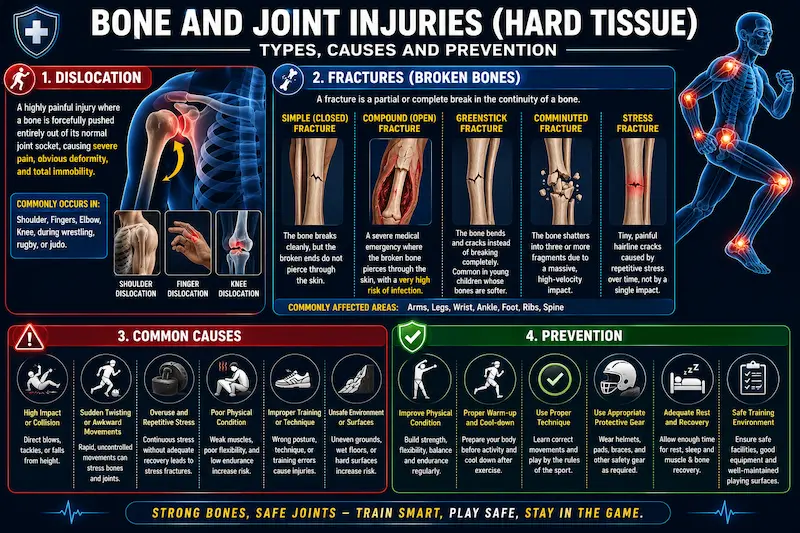
- Dislocation: A highly painful injury where a bone is forcefully pushed entirely out of its normal joint socket, causing severe pain, obvious deformity, and total immobility. This commonly occurs in the shoulder or fingers during wrestling, rugby, or judo.
- Fractures (Broken Bones):
- Simple (Closed) Fracture: The bone breaks cleanly, but the broken ends do not pierce through the skin.
- Compound (Open) Fracture: A severe medical emergency where the broken bone violently pierces through the skin, exposing the bone and carrying a very high risk of life-threatening infection.
- Greenstick Fracture: The bone bends and cracks instead of breaking completely into separate pieces (this is highly common in young children whose bones are softer and still developing).
- Comminuted Fracture: The bone shatters into three or more small fragments due to a massive, high-velocity impact.
- Stress Fracture: Tiny, painful hairline cracks in the bone caused by repetitive, continuous stress over time rather than a single impact (very common in the shin bones of marathon runners).
Causes and Prevention: Injuries are typically caused by poor physical conditioning, skipping warm-ups, faulty equipment, uneven playing surfaces, overtraining, and aggressive rule-breaking. To prevent them, athletes must always perform a progressive warm-up, wear high-quality standard protective gear (helmets, mouthguards, shin pads), ensure field safety, and strictly adhere to the biomechanical rules of their respective sports.
Topic 5: Management and Treatment of Sports Injuries (PRICER & First Aid)
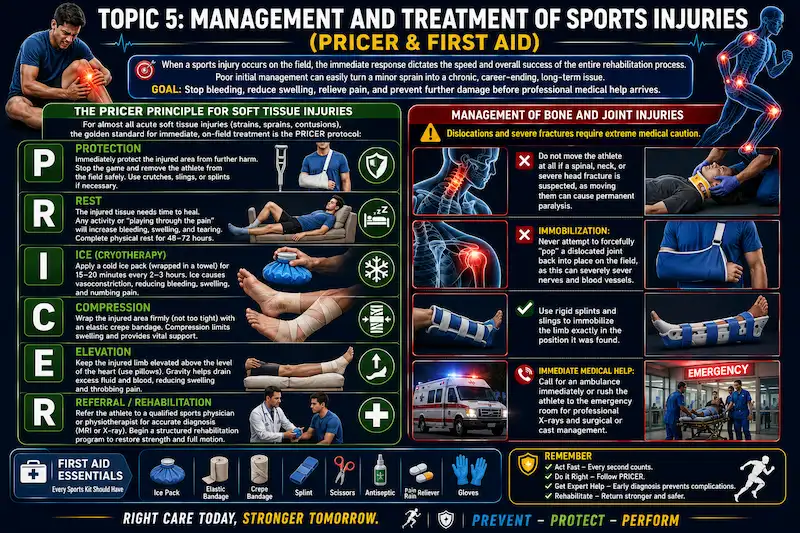
When a sports injury occurs on the field, the immediate response dictates the speed and overall success of the entire rehabilitation process. Poor initial management can easily turn a minor sprain into a chronic, career-ending, long-term issue. The primary goal of first aid in sports is to stop active bleeding, reduce severe internal swelling, alleviate sharp pain, and prevent any further structural damage before professional medical help arrives.
The PRICER Principle for Soft Tissue Injuries
For almost all acute soft tissue injuries (such as strains, sprains, and contusions), the golden standard for immediate, on-field treatment is the PRICER protocol:
- P – Protection: The very first step is to immediately protect the injured area from further harm. Stop the game and remove the athlete from the field safely. Use crutches, slings, or splints if necessary so the athlete doesn’t accidentally put body weight on the damaged limb.
- R – Rest: The injured tissue absolutely needs time to initiate the biological healing process. Any continued physical activity or “playing through the pain” will dramatically increase internal bleeding, swelling, and muscle tearing. Complete physical rest for 48 to 72 hours is usually recommended by physiotherapists.
- I – Ice (Cryotherapy): Apply a cold ice pack (always wrapped in a towel or cloth to prevent severe frostbite/ice burns on the skin) to the injured area for 15-20 minutes every 2-3 hours. Ice causes vasoconstriction (the rapid narrowing of the blood vessels), which drastically reduces internal bleeding, stops fluid accumulation (swelling), and naturally numbs the pain receptors.
- C – Compression: Wrap the injured joint or muscle firmly (but not tight enough to cut off blood circulation) with an elastic crepe bandage. Compression restricts the physical space available for swelling to build up and provides vital physical support to the weakened structure.
- E – Elevation: Keep the injured limb elevated above the level of the athlete’s heart (usually by propping it up on pillows). Gravity naturally helps drain excess fluid and blood away from the injury site back into the central circulation, significantly reducing throbbing pain and swelling.
- R – Referral / Rehabilitation: Finally, refer the athlete to a qualified sports physician or physiotherapist for an accurate medical diagnosis (via MRI or X-ray scans). Once cleared, the athlete must begin a structured, progressive physical therapy rehabilitation program to safely restore muscle strength and a full range of motion.
Management of Bone and Joint Injuries
Unlike simple soft tissue injuries, suspected dislocations and severe bone fractures require extreme medical caution on the field.
- Do not move the athlete at all if a spinal, neck, or severe head fracture is suspected, as moving them can cause permanent paralysis.
- Immobilization: Never attempt to forcefully “pop” a dislocated joint back into place on the field, as this can severely sever nerves and arterial blood vessels. Use rigid splints and slings to immobilize the limb exactly in the awkward position it was found.
- Immediate Medical Help: Call for an ambulance immediately or rush the athlete to the emergency room for professional X-rays and surgical or cast management.
Chapter Conclusion: Physiology and Injuries in Sports
This chapter bridges the gap between biological science and athletic performance. It highlights how physiological factors like muscle fiber types (fast-twitch and slow-twitch), lung capacity, and oxygen uptake determine an athlete’s strength, speed, and endurance. Furthermore, it explains the positive adaptations of the cardiorespiratory and muscular systems due to regular exercise, such as muscle hypertrophy and a decreased resting heart rate. Crucially, the chapter provides comprehensive knowledge on sports injuries—classifying them into soft tissue, bone, and joint injuries—and emphasizes the importance of preventive measures and first-aid protocols like PRICER for effective rehabilitation.
Frequently Asked Questions (FAQs)
Objective Type Questions (1 Mark)
Q1. Which type of muscle fibers are primarily responsible for explosive power and speed? +
Ans. B) Fast-twitch fibers (White)
Q2. A sprain is an injury associated with which of the following? +
Ans. C) Ligament
Q3. What does the letter ‘I’ stand for in the PRICER method of injury management? +
Ans. B) Ice
Q4. Increase in the size of muscle fibers due to regular resistance training is known as: +
Ans. B) Muscle Hypertrophy
Q5. A bone break in which the bone bends and partially breaks, mostly seen in children, is called: +
Ans. C) Greenstick Fracture
Very Short Answer Type Questions (2 Marks)
Q6. Differentiate between Sprain and Strain. +
Ans. A Sprain is a soft tissue injury involving the overstretching or tearing of ligaments (tissues that connect bone to bone), commonly occurring in wrists and ankles. A Strain, on the other hand, is an injury to a muscle or tendon (tissue that connects muscle to bone), often caused by lifting heavy weights or sudden violent movements.
Q7. State any two physiological factors determining the flexibility of an athlete. +
Ans. Two key factors determining flexibility are:
- Muscle Strength: Weak muscles can lead to poor posture and restricted range of motion. Adequate strength allows for better stretching.
- Age and Gender: Flexibility naturally decreases with age. Furthermore, females generally tend to be more flexible than males due to anatomical and hormonal differences.
Q8. What do you mean by First Aid? State its main objective. +
Ans. First aid is the immediate, temporary medical assistance provided to an injured or ill person before professional medical help arrives. Its primary objectives are to save lives, prevent the condition from worsening, and promote early recovery.
Q9. Define Cardiac Output. +
Ans. Cardiac output is the total volume of blood pumped by the heart (ventricles) in one minute. It is calculated by multiplying the Stroke Volume (amount of blood pumped per beat) by the Heart Rate (beats per minute). Regular exercise increases maximum cardiac output.
Short Answer Type Questions (3 Marks)
Q10. Explain the PRICER method of treating sports injuries. +
Ans. PRICER is a standard protocol for treating acute soft tissue injuries like sprains and strains. It stands for:
- P – Protection: Protect the injured area from further damage using splints or crutches.
- R – Rest: Stop the activity immediately to allow healing.
- I – Ice: Apply ice packs for 15-20 minutes to reduce swelling and pain.
- C – Compression: Wrap the area with an elastic bandage to minimize internal bleeding and swelling.
- E – Elevation: Keep the injured part raised above heart level to drain fluids away.
- R – Referral/Rehabilitation: Consult a doctor for a proper diagnosis and start a rehab program.
Q11. Enlist any three causes of sports injuries. +
Ans. Three common causes of sports injuries are:
- Lack of Proper Warm-up: Engaging in intense physical activity without warming up leaves muscles stiff and highly susceptible to strains and tears.
- Poor Technique and Equipment: Using faulty techniques, incorrect body mechanics, or wearing inappropriate gear (like poorly fitted shoes) significantly increases injury risk.
- Overtraining and Fatigue: Pushing the body beyond its limits without adequate rest leads to muscle fatigue and repetitive stress injuries.
Q12. What are the various types of Bone Fractures commonly seen in sports? Explain briefly. +
Ans. Common bone fractures include:
- Greenstick Fracture: The bone bends and cracks but does not break completely (common in children).
- Comminuted Fracture: The bone breaks or splinters into three or more pieces.
- Transverse Fracture: The break is in a straight line across the bone.
- Oblique Fracture: The break occurs at an angle across the bone.
Q13. How does regular exercise impact the muscular system? Mention three effects. +
Ans. Regular exercise has profound effects on the muscular system:
- Muscle Hypertrophy: Muscle fibers increase in size and thickness, making the muscles stronger and more robust.
- Increased Capillarization: The number of blood capillaries around the muscles increases, improving oxygen and nutrient delivery.
- Delayed Onset of Fatigue: Trained muscles can store more glycogen and process lactic acid efficiently, allowing athletes to perform longer without getting tired.
Long Answer Type Questions (5 Marks)
Q14. Discuss in detail the physiological factors determining strength and speed in athletes. +
Ans. Physiological Factors Determining Strength:
- Muscle Cross-Sectional Area: Larger muscles have thicker fibers. The greater the cross-sectional area, the more force the muscle can exert.
- Muscle Fiber Type: Muscles with a higher percentage of Fast-Twitch (white) fibers contract faster and generate more power/strength compared to slow-twitch fibers.
- Nerve Impulses: The central nervous system’s ability to recruit a maximum number of motor units simultaneously determines explosive strength.
Physiological Factors Determining Speed:
- Muscle Composition: A genetic dominance of fast-twitch (Type II) fibers is the most crucial factor for high speed and sprinting abilities.
- Mobility of Nervous System: Rapid excitation and inhibition of the motor centers in the brain allow muscles to contract and relax quickly.
- Flexibility: Good flexibility allows for a maximum range of motion, extending the stride length during a sprint.
- ATP-CP Reserves: Speed depends on the instant energy provided by Adenosine Triphosphate (ATP) and Creatine Phosphate (CP) stored in muscles.
Q15. Elaborate on the effects of long-term exercise on the Cardiorespiratory System. +
Ans. Long-term endurance training brings about significant physiological adaptations in the heart and lungs:
- Cardiac Hypertrophy: The heart muscle (especially the left ventricle) becomes stronger and slightly larger, allowing it to pump more blood with less effort.
- Decrease in Resting Heart Rate: A trained athlete’s resting heart rate drops significantly (bradycardia) because the heart pumps more blood per beat, so it needs to beat fewer times.
- Increase in Stroke Volume and Cardiac Output: The amount of blood ejected per beat (stroke volume) increases, leading to a higher maximum cardiac output during intense exercise.
- Increased Tidal Volume and Lung Capacity: The amount of air inhaled and exhaled per breath increases, and overall lung capacity improves, making respiration more efficient.
- Faster Recovery Rate: An athlete’s heart rate and breathing return to their normal resting state much faster after strenuous activity compared to an untrained person.
- Increase in VO2 Max: The body’s maximum ability to uptake, transport, and utilize oxygen improves dramatically.
Q16. Classify Sports Injuries. Explain any three soft tissue injuries along with their preventive measures. +
Ans. Sports injuries are broadly classified into three categories: Soft Tissue Injuries, Bone Injuries (Fractures), and Joint Injuries (Dislocations).
Common Soft Tissue Injuries:
- Contusion (Bruise): Caused by a direct hit or blow, leading to crushed blood vessels under the skin without breaking it. Usually occurs in contact sports like boxing or football.
- Abrasion: A scrape or friction burn where the top layer of skin is rubbed off, usually caused by falling on hard surfaces like a track or court.
- Laceration: A jagged, irregular cut or tear in the skin and flesh caused by a sharp object or severe impact.
Preventive Measures:
- Proper Warm-up and Cool-down: Prepares muscles and joints for stress and helps in recovery.
- Use of Protective Equipment: Wearing appropriate gear such as shin guards, helmets, knee pads, and proper footwear.
- Safe Environment: Ensuring the playing surface is smooth, clean, and free of hazardous objects.
- Adhering to Rules: Following the rules of the game to avoid unnecessary violent contact.
Q17. What are joint dislocations? Explain the different types of dislocations common in sports. +
Ans. A dislocation is a severe joint injury where the ends of the bones are forced out of their normal anatomical positions. It is highly painful, restricts movement, and is usually caused by sudden trauma, impact, or a bad fall.
Common Types of Dislocations in Sports:
- Shoulder Dislocation: The most common type, where the head of the humerus (upper arm bone) pops out of the cup-shaped socket of the shoulder blade. Frequent in sports like judo, wrestling, and rugby.
- Lower Jaw Dislocation: Occurs when the lower jaw bone is forced out of the temporomandibular joint, usually due to a direct punch in combat sports like boxing.
- Hip Dislocation: The head of the femur (thigh bone) slips out of its socket in the pelvis. This requires massive force and is less common, but can happen in high-impact collisions.
- Wrist/Finger Dislocation: The bones of the fingers or wrist are moved out of place, highly common in basketball, volleyball, or cricket while catching a fast ball incorrectly.
Treatment Note: A dislocation requires immediate medical attention. The joint should be immobilized using a sling or splint, and a doctor should perform the reduction (putting the bone back in place).