
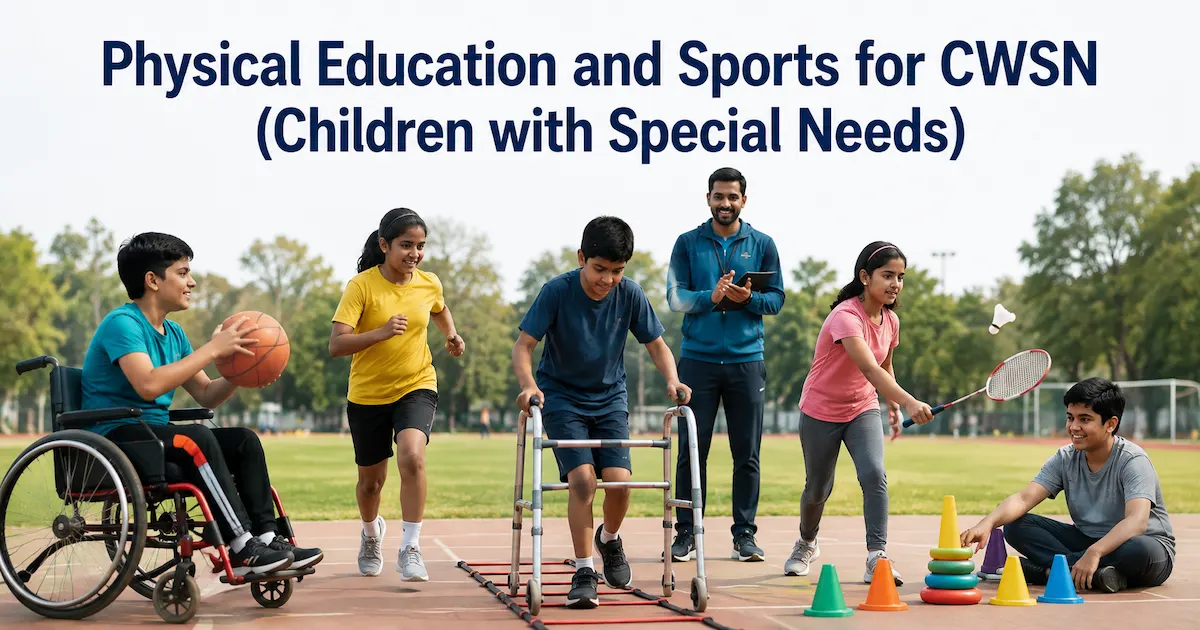
1. Concept of Disability and Disorder
In the field of physical education and special education, the terms “disability” and “disorder” are often used interchangeably by the general public. However, medically and educationally, they have very distinct meanings. Understanding this difference is the first crucial step in providing the right support and environment for Children with Special Needs (CWSN).
Concept of Disability: A disability is a restriction or lack of ability (resulting from an impairment) to perform an activity in the manner or within the range considered normal for a human being. It is a condition that limits a person’s movements, senses, or activities. A disability can be present from birth or can occur during a person’s lifetime due to an accident, injury, or medical condition. For example, a person who has lost their legs in an accident has a physical disability, which restricts their natural ability to walk. Disabilities are usually permanent in nature and affect the fundamental functioning of the individual in society.
Concept of Disorder: A disorder, on the other hand, is a disruption or an abnormality of the normal physical or mental functions of the body. It is often a medical condition that might not be visible from the outside but deeply affects how a person processes information or interacts with the world. Disorders are usually linked to neurological or psychological anomalies. For instance, Attention Deficit Hyperactivity Disorder (ADHD) or Obsessive-Compulsive Disorder (OCD) are disorders. A disorder can often be treated, managed, or even cured with proper medication, therapy, and psychological support.
In simple terms, a disorder is an illness or disruption that causes a medical problem, while a disability is the resulting limitation in performing normal daily activities.

2. Types of Disability, its Causes & Nature
Disabilities can manifest in various forms, affecting different aspects of an individual’s life. According to the CBSE syllabus, we primarily focus on two major categories: Physical Disability and Intellectual Disability. Understanding their nature and causes helps in creating inclusive sports environments.
1. Physical Disability:
- Nature: A physical disability is a condition that substantially limits one or more basic physical activities in life, such as walking, climbing stairs, reaching, carrying, or lifting. It affects a person’s mobility, dexterity, or stamina. This includes conditions like paralysis, amputation, cerebral palsy, or muscular dystrophy.
- Causes: The causes of physical disabilities can be congenital (present at birth) due to genetic mutations or complications during pregnancy. They can also be acquired later in life due to severe accidents, spinal cord injuries, or diseases like polio and severe arthritis.
2. Intellectual Disability:
- Nature: Intellectual disability is characterized by significant limitations both in intellectual functioning (reasoning, learning, problem-solving) and in adaptive behavior, which covers a range of everyday social and practical skills. This disability originates before the age of 18. Children with intellectual disabilities take longer to learn to speak, walk, and take care of their personal needs.
- Causes: The causes are often complex and neurological. They include genetic conditions like Down Syndrome, problems during pregnancy (such as maternal malnutrition, drug use, or infections), complications during childbirth (like lack of oxygen to the baby’s brain), or severe childhood illnesses (like meningitis or measles) that affect brain development.

3. Disability Etiquette
Disability etiquette refers to respectful and courteous guidelines for communicating and interacting with people who have disabilities. Often, people feel awkward or unsure about how to behave around Children with Special Needs (CWSN). Practicing proper disability etiquette ensures that we treat them with the dignity, respect, and equality they deserve, breaking down social barriers and fostering true inclusion.
Here are the fundamental rules of Disability Etiquette:
- Speak Directly to the Person: Always make eye contact and speak directly to the person with a disability, rather than talking to their companion, interpreter, or wheelchair pusher. Treat them as an independent individual.
- Ask Before You Help: Never assume that a person with a disability needs your help. If you feel they might need assistance, politely ask, “Would you like some help?” If they say no, respect their decision and do not force your assistance.
- Respect Personal Space and Equipment: A wheelchair, crutches, or a guide dog are considered part of the person’s personal space. Never lean on a person’s wheelchair, touch their mobility aids without permission, or distract a working service animal.
- Be Patient and Listen Attentively: When speaking with someone who has a speech impairment or an intellectual disability, be patient. Do not interrupt or try to finish their sentences. Give them the time they need to express themselves fully.
- Use Appropriate Language: Always use “People-First Language.” Instead of saying “a disabled person” or “a handicapped child,” say “a person with a disability” or “a child with special needs.” This emphasizes their humanity first, rather than defining them by their condition.

4. Aim and Objectives of Adaptive Physical Education
Physical education is a fundamental right for every student, regardless of their physical or mental abilities. For Children with Special Needs (CWSN), regular physical education classes might be too difficult or unsafe. This is where Adaptive Physical Education (APE) comes in. APE is a specially designed, modified physical education program that caters to the unique needs of infants, toddlers, children, and youth with disabilities.
Aim of Adaptive Physical Education: The primary aim of APE is to ensure that every child with a disability is provided with physical education services that safely and effectively meet their unique physical, cognitive, and social needs. The ultimate goal is to equip them with the motor skills, physical fitness, and knowledge required to enjoy a healthy, active, and independent lifestyle. Students can also learn more about the components and importance of Physical Fitness, Wellness & Lifestyle
Objectives of Adaptive Physical Education:
- Develop Motor Skills: To help CWSN develop essential fundamental motor skills (like throwing, catching, walking, and balancing) by modifying the equipment or the rules of the game (e.g., using a lighter ball or a smaller court).
- Enhance Physical Fitness: To improve their cardiovascular endurance, muscular strength, and flexibility, which are critical for their daily living and overall health.
- Boost Self-Esteem and Confidence: By participating in adapted sports and achieving personal goals, CWSN experience success. This shatters their feelings of inadequacy and heavily boosts their self-confidence.
- Promote Active Participation: To ensure that CWSN are not left sitting on the sidelines. APE guarantees that they are actively involved in physical activities, integrating them seamlessly with their peers.
- Social Integration: Through team games and group activities, APE teaches CWSN crucial social skills like cooperation, waiting for their turn, and sharing, helping them integrate better into mainstream society.

5. Role of Various Professionals for Children with Special Needs
The development and integration of Children with Special Needs cannot be achieved by a single teacher or parent. It requires a multidisciplinary team approach. Various highly trained professionals work together collaboratively to ensure the holistic development of CWSN.
1. Special Educator: The special educator is the core academic pillar. They assess the child’s specific learning needs and create an Individualized Education Program (IEP). They modify the school curriculum, teaching methods, and exam patterns so the child can understand and learn at their own pace.
2. Physical Education Teacher (PET): The PET is responsible for designing the Adaptive Physical Education program. They modify sports rules, adapt physical activities, and change sports equipment (like using audible balls for blind students) to ensure that CWSN can participate safely in physical activities and improve their fitness.
3. Physiotherapist (PT): A physiotherapist focuses on the child’s gross motor skills and mobility. Through specific exercises and therapies, they help CWSN improve their muscle strength, bone structure, posture, and balance. They play a critical role in rehabilitating children with physical disabilities like cerebral palsy.
4. Occupational Therapist (OT): While a PT focuses on large movements, an Occupational Therapist focuses on fine motor skills and daily living activities. They teach CWSN how to perform essential independent tasks like dressing, eating, writing, and using adaptive tools, thereby making them as self-reliant as possible.
5. Speech Therapist (Speech-Language Pathologist): Many CWSN struggle with communication. A speech therapist helps children who have difficulties with speaking, pronunciation, or understanding language. For non-verbal children, they introduce alternative communication methods like sign language or communication boards.
6. Counselor / School Psychologist: Living with a disability can often lead to frustration, anxiety, and depression. A counselor provides a safe space for CWSN to express their feelings. They offer emotional support, help build resilience, and guide both the children and their parents in coping with societal challenges and behavioral issues.

Chapter 4: Physical Education and Sports for CWSN
This chapter focuses on Physical Education and Sports for Children with Special Needs (CWSN). It explains the importance of providing equal opportunities and inclusive participation in physical activities and sports. Adapted physical education helps children with different abilities develop physical fitness, motor skills, confidence, social interaction and independence. The chapter also highlights the importance of appropriate adaptations, supportive teaching methods, safety measures and teamwork among professionals involved in the development of children with special needs.
Frequently Asked Questions (FAQs)
Objective Type Questions (1 Mark)
Q1. What does CWSN stand for? +
Ans. B) Children With Special Needs
Q2. Which of the following is an important objective of inclusive physical education? +
Ans. B) Providing equal opportunities for participation
Q3. Which professional mainly helps improve mobility, strength and movement? +
Ans. C) Physiotherapist
Q4. Which of the following is an example of an adapted sport? +
Ans. A) Sitting Volleyball
Q5. Which professional supports communication and speech development? +
Ans. A) Speech Therapist
Very Short Answer Type Questions (2 Marks)
Q6. What do you mean by CWSN? +
Ans. CWSN stands for Children With Special Needs. These are children who may require additional support, adaptations or assistance because of physical, sensory, intellectual, developmental or other functional needs.
Q7. What is adapted physical education? +
Ans. Adapted physical education is a modified form of physical education in which activities, equipment, rules or teaching methods are adjusted according to the individual abilities and needs of children.
Q8. Mention any two benefits of physical activity for CWSN. +
- It improves physical fitness and motor skills.
- It develops confidence and self-esteem.
- It encourages social interaction.
- It promotes independence.
Q9. Name any two professionals who may work with CWSN. +
Ans. Any two of the following:
- Special Educator
- Physical Education Teacher
- Physiotherapist
- Occupational Therapist
- Speech Therapist
- Counselor
Short Answer Type Questions (3 Marks)
Q10. Explain any three benefits of sports for CWSN. +
Ans. Sports provide several benefits to children with special needs:
- Physical Development: Regular physical activity improves strength, endurance, flexibility, balance and motor skills.
- Psychological Development: Participation can improve confidence, self-esteem and emotional well-being.
- Social Development: Team activities provide opportunities for communication, cooperation, friendship and social interaction.
Q11. Explain any three adaptations that can be made in physical activities for CWSN. +
Ans. Activities can be adapted in the following ways:
- Equipment: Use lighter, softer, larger or specially designed equipment.
- Rules: Modify or simplify rules according to the ability of the child.
- Environment: Provide safe, accessible and barrier-free playing spaces.
Q12. Explain the role of a Physical Education Teacher in inclusive physical education. +
Ans. A Physical Education Teacher should:
- Understand the abilities and needs of each child.
- Plan suitable and safe physical activities.
- Modify activities, equipment and rules when required.
- Encourage participation and teamwork.
- Provide motivation and positive feedback.
Q13. What is the importance of inclusion in physical education? +
Ans. Inclusion ensures that children with and without disabilities get opportunities to participate together. It promotes equality, social interaction, cooperation, confidence and a sense of belonging.
Long Answer Type Questions (5 Marks)
Q14. Explain the importance of physical education and sports for CWSN in detail. +
Ans. Physical education and sports are important for the overall development of children with special needs. Properly planned activities can provide the following benefits:
- Physical Development: Improves strength, endurance, flexibility, balance and coordination.
- Motor Development: Helps develop fundamental and sports-related motor skills.
- Psychological Development: Builds confidence, self-esteem and emotional well-being.
- Social Development: Encourages communication, cooperation, friendship and teamwork.
- Independence: Physical activity can help children develop functional abilities and confidence to participate in daily life.
Q15. Explain the different methods of adapting physical activities for CWSN. +
Ans. Physical activities can be adapted according to the individual needs of the child. Important adaptations include:
- Modification of Equipment: Use equipment of suitable size, weight, colour or texture.
- Modification of Rules: Rules can be simplified to make participation easier.
- Modification of Space: The playing area can be reduced or arranged to ensure safety.
- Modification of Instructions: Use short, clear and step-by-step instructions with demonstrations.
- Modification of Time: Provide additional time for practice and participation when required.
Q16. Discuss the role of different professionals in the development of CWSN. +
Ans. The development of CWSN often requires cooperation between different professionals. Their roles include:
- Special Educator: Provides individualized educational support and learning strategies.
- Physical Education Teacher: Plans adapted physical activities, games and sports.
- Physiotherapist: Works on mobility, strength, posture and physical movement.
- Occupational Therapist: Supports functional skills, independence and participation in daily activities.
- Speech Therapist: Supports communication, speech and language development.
- Counselor: Provides emotional, psychological and social support.
Q17. Explain the principles that should be followed while teaching physical education to CWSN. +
Ans. The following principles should be considered:
- Individual Differences: Activities should be planned according to individual abilities and needs.
- Safety: The environment and equipment should be safe and accessible.
- Equal Opportunity: Every child should receive an opportunity to participate.
- Progressive Development: Activities should progress gradually from simple to complex.
- Positive Reinforcement: Teachers should encourage effort, improvement and participation.
- Cooperation: Parents, teachers and relevant professionals should work together.