
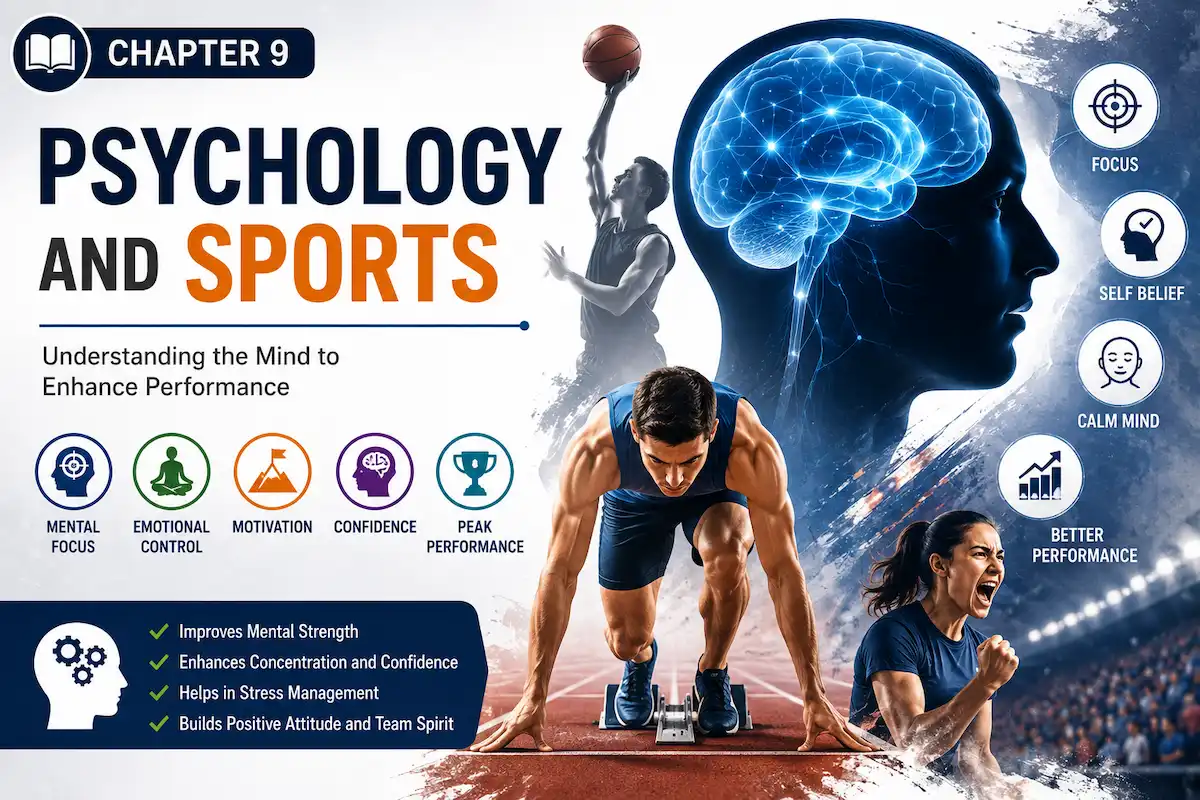
1. Definition & Importance of Psychology in Physical Education & Sports
We often hear commentators say, “Sports is 90% mental and 10% physical.” This statement perfectly highlights the role of psychology in sports. Even if an athlete has the best physical training in the world, they cannot win a gold medal if their mind breaks down under pressure.
Definition of Psychology and Sports Psychology: The word ‘Psychology’ is derived from two Greek words: “Psyche” (meaning soul or mind) and “Logos” (meaning study). Simply put, psychology is the scientific study of the human mind and behavior. Sports Psychology is a specialized branch that applies psychological principles and theories to the world of sports. It studies how psychological factors affect an athlete’s physical performance, and how participation in sports affects an individual’s psychological development, health, and well-being.
Importance in Physical Education and Sports:
- Enhancing Physiological Capacities: Psychological techniques like visualization and self-talk can push an athlete’s body to perform beyond its perceived physical limits. A highly motivated athlete will always run faster and lift heavier.
- Learning Motor Skills: When teaching a new skill (like a tennis serve), a coach must understand the psychological state of the learner. Good sports psychology helps in creating a positive, stress-free environment that speeds up the learning process. The scientific analysis of body movement and motor performance is also covered in Fundamentals of Kinesiology & Biomechanics in Sports
- Controlling Emotions: Sports are filled with intense emotional moments. Psychology teaches athletes how to control negative emotions like extreme anger, frustration, and anxiety, ensuring these emotions do not ruin their game strategy.
- Preparation for Competitions: The pressure of a final match can cause “choking” (a sudden collapse in performance). Psychological training helps build the mental toughness required to stay calm and focused under the bright lights of major tournaments.

2. Developmental Characteristics at Different Stages of Development
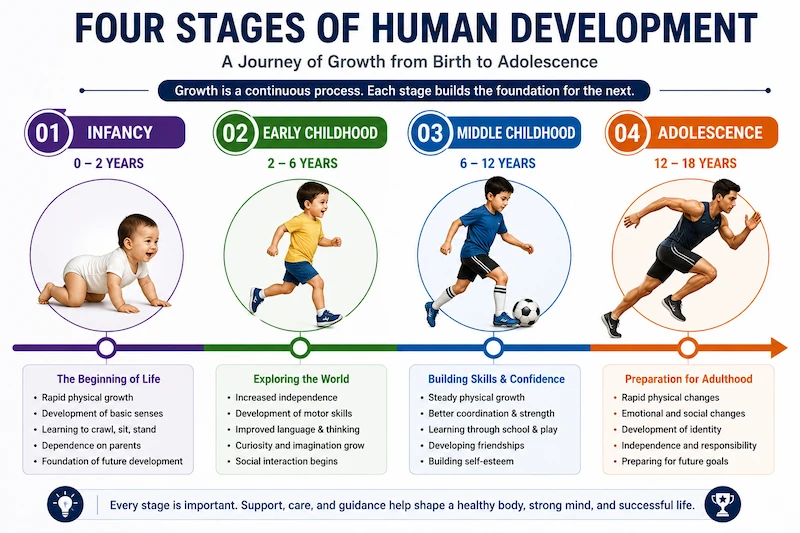
Human beings go through a continuous process of physical and psychological changes from birth to death. To effectively teach physical education, coaches must deeply understand the specific characteristics of children at different age stages, so they can design the right sports activities for them.
1. Infancy (0 to 2 Years):
- Characteristics: This stage is marked by extremely rapid physical growth. The infant begins to gain control over their basic motor movements, learning to sit, crawl, and eventually walk. Their learning is entirely based on sensory experiences (touch, sight, sound).
- Sports Focus: Focus on basic, unstructured play that stimulates their senses and helps them discover their own body parts.
2. Early Childhood (3 to 7 Years):
- Characteristics: Often called the “pre-school” age. Children are highly energetic, intensely curious, and very restless. They have a short attention span and learn by imitating elders. Their fundamental motor skills (running, jumping, throwing) start developing rapidly.
- Sports Focus: Introduce simple, fun physical activities and basic gymnastics without strict rules. The goal is to improve neuro-muscular coordination, not competition.
3. Later Childhood (8 to 12 Years):
- Characteristics: Physical growth slows down slightly, but strength and motor coordination improve dramatically. Children start understanding logic and rules. They become highly social, prefer playing in groups, and develop a strong desire for achievement and recognition.
- Sports Focus: This is the golden age for learning complex sports skills. Introduce team sports, emphasize rule-following, and start teaching sportsmanship and cooperation.
4. Adolescence (13 to 19 Years):
- Characteristics: This is the most complex stage, marked by the onset of puberty. There is a sudden spurt in physical growth (height, weight, and muscle mass). Hormonal changes lead to emotional instability, mood swings, and a strong desire for independence and identity formation.
- Sports Focus: High-intensity training and competitive sports are introduced. Coaches must act as guides and counselors, helping them channel their aggressive energy positively through sports. Appropriate training loads and recovery are important when designing programs for developing athletes, as explained in Training & Doping in Sports
3. Adolescent Problems & their Management
Adolescence (the teenage years) is often described as a period of “storm and stress.” It is a highly sensitive transition phase between childhood and adulthood. The rapid physical, hormonal, and psychological changes often create severe problems for teenagers.
Common Adolescent Problems:
- Physical and Awkwardness Issues: Due to sudden and sometimes uneven growth spurts, teenagers often feel physically awkward. Changes in facial appearance (like severe acne) can lead to a massive drop in self-confidence and an inferiority complex.
- Emotional Instability: Hormonal floods cause severe mood swings. A teenager might be extremely happy one moment and deeply depressed or angry the next. They often exhibit aggressive behavior and a rebellious attitude towards authority (parents and teachers).
- Peer Pressure and Substance Abuse: The desire to “fit in” and be accepted by friends is overwhelming. This intense peer pressure can push adolescents toward harmful habits like smoking, alcohol, or drug abuse.
- Eating Disorders: Due to unrealistic body images promoted on social media, teenagers (especially girls) often fall victim to severe eating disorders like Anorexia Nervosa (starving oneself) or Bulimia (binge eating and vomiting).
Management of Adolescent Problems:
- Sympathetic Attitude: Parents and teachers must act as friends rather than dictators. They should listen patiently to the teenager’s problems without immediately judging or scolding them.
- Channeling Energy through Sports: Sports are the greatest stress buster. Engaging adolescents in heavy physical activities safely burns off their excess energy, reduces aggression, and builds immense self-esteem. Regular physical activity is also an important part of Physical Fitness, Wellness & Lifestyle
- Proper Counseling and Education: Schools must provide professional psychological counseling and proper sex education to clear their doubts and protect them from misinformation. For students with special needs, appropriate professional support is also discussed in Physical Education & Sports for CWSN
- Assigning Responsibility: Giving them leadership roles (like making them the captain of a sports team) fulfills their need for importance and teaches them maturity and responsibility.

4. Team Cohesion and Sports
In team sports like football, basketball, or relay races, having a group of superstar players does not guarantee a championship. If those superstars do not play together as a single unit, they will easily lose to a less talented but highly united team. This invisible bond that holds a team together is called Team Cohesion.
Definition of Team Cohesion: Team cohesion is defined as a dynamic process that reflects the tendency of a group to stick together and remain united in the pursuit of its goals and objectives. It is the strong “We” feeling instead of the “I” feeling.
Types of Team Cohesion:
- Task Cohesion: This refers to the degree to which team members work together specifically to achieve a common goal (like winning the district championship). Players with high task cohesion might not be best friends off the field, but on the field, they cooperate perfectly to win the game.
- Social Cohesion: This reflects the degree to which team members like each other and enjoy each other’s company outside of sports. It is about interpersonal relationships, friendship, and emotional support.
Importance in Sports: High team cohesion directly leads to better athletic performance. When players trust each other, communication on the field becomes flawless. Players in cohesive teams experience less anxiety, have higher levels of job satisfaction, and are far less likely to quit or leave the team during tough times.
How to Build Team Cohesion:
- Clear Roles: The coach must define a specific role for every player so that no one feels useless or confused.
- Set Team Goals: Focus on what the team wants to achieve, rather than individual records or personal glory.
- Team Building Activities: Organizing off-field activities like team dinners, camping trips, or movie nights helps build deep social cohesion and trust among players.

5. Introduction to Psychological Attributes: Attention, Resilience, Mental Toughness
Elite athletes are separated from average athletes not just by their physical speed, but by specific psychological attributes. These mental tools help them survive and thrive in the highly stressful environment of competitive sports.
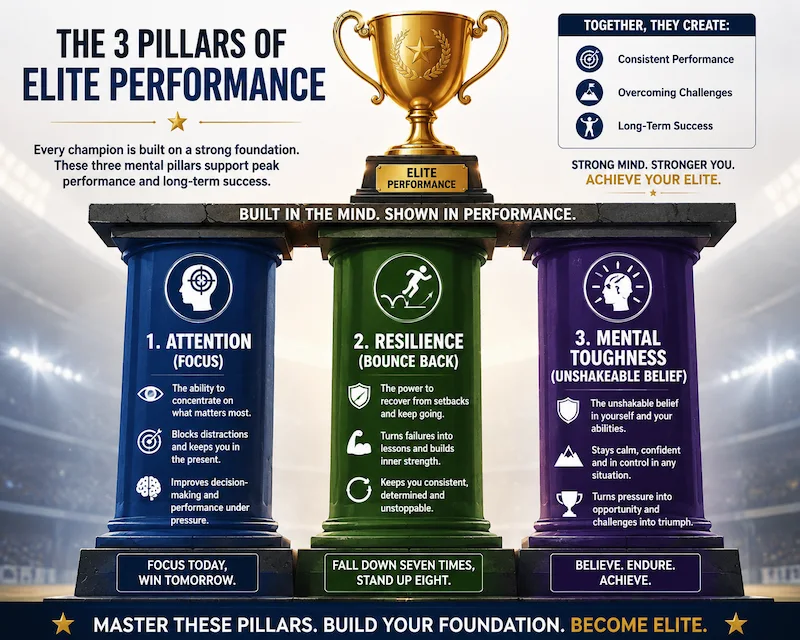
1. Attention (Focus): Attention is the ability of an athlete to direct their mental focus exclusively towards relevant cues in their environment while completely ignoring distractions. For example, when Virat Kohli is batting, his attention is solely locked onto the bowler’s hand and the seam of the cricket ball. He completely tunes out the noise of 50,000 screaming fans, sledging from the opponents, and his own internal fears. High attention results in incredibly fast reaction times and perfect execution of skills.
2. Resilience: Sports are brutal; they are full of failures, injuries, and heartbreaking losses. Resilience is the psychological ability to bounce back quickly from adversity, trauma, or a severe setback. A resilient athlete does not quit when they suffer a major knee injury or lose a crucial final match. Instead, they accept the reality, learn from the failure, maintain a positive attitude, and work twice as hard to make a stronger comeback.
3. Mental Toughness: Mental toughness is the ultimate psychological edge. It is a collection of attributes that allows an athlete to cope better than their opponents with the heavy demands of sports. A mentally tough athlete possesses unshakeable self-belief and an intense desire to succeed. Even when they are exhausted, playing in extreme weather, and trailing on the scoreboard, they remain calm, determined, and in total control of their emotions. They thrive on pressure and view highly stressful situations as exciting challenges rather than threats.
Chapter 9: Psychology and Sports
Psychology and Sports deals with the role of the mind in sports performance. It helps us understand how personality, motivation, aggression, attention, resilience and mental toughness influence an athlete’s behaviour and performance. The chapter also explains how psychological factors can help athletes develop confidence, concentration, emotional control and better performance. :contentReference[oaicite:3]{index=3}
Frequently Asked Questions (FAQs)
Objective Type Questions (1 Mark)
Q1. What is Sports Psychology? +
Ans. B) Study of psychological factors related to sports and performance
Q2. Which of the following is a major factor in sports psychology? +
Ans. D) All of the above
Q3. Which personality theory is represented by OCEAN? +
Ans. A) Big Five Personality Theory
Q4. Which type of motivation comes from internal rewards? +
Ans. B) Intrinsic Motivation
Q5. Which type of aggression is mainly driven by the intention to harm? +
Ans. B) Hostile Aggression
Q6. Which mental quality helps an athlete recover from setbacks? +
Ans. A) Resilience
Very Short Answer Type Questions (2 Marks)
Q7. Define Sports Psychology. +
Ans. Sports Psychology is the study of psychological factors that influence sports participation, behaviour and performance. It helps athletes develop mental skills such as focus, confidence, motivation and emotional control.
Q8. What is personality? +
Ans. Personality refers to the relatively consistent pattern of thoughts, feelings, attitudes and behaviours that makes an individual different from others.
Q9. What is motivation in sports? +
Ans. Motivation is the psychological force that drives an athlete to start, continue and persist in activities directed towards achieving a goal. It provides passion and direction for sports participation. :contentReference[oaicite:4]{index=4}
Q10. Differentiate between intrinsic and extrinsic motivation. +
| Intrinsic Motivation | Extrinsic Motivation |
|---|---|
| Comes from internal satisfaction. | Comes from external rewards or recognition. |
| Includes enjoyment, personal growth and passion. | Includes trophies, prizes, fame or recognition. |
| Example: Playing because one enjoys the sport. | Example: Competing to win a prize. |
These two types are identified in the Chapter 9 motivation material. :contentReference[oaicite:5]{index=5}
Q11. What is aggression in sports? +
Ans. Aggression in sports refers to intentional behaviour directed towards causing physical or psychological harm to another living being.
Short Answer Type Questions (3 Marks)
Q12. Explain the importance of Sports Psychology. +
Ans. Sports Psychology is important because it helps athletes:
- Improve concentration and mental focus.
- Develop confidence and self-belief.
- Control emotions, stress and pressure.
- Increase motivation and goal-directed behaviour.
- Develop resilience and mental toughness.
- Improve overall sports performance.
The Chapter 9 featured material specifically highlights mental focus, emotional control, motivation, confidence and peak performance. :contentReference[oaicite:6]{index=6}
Q13. Explain the Big Five personality traits. +
Ans. The Big Five personality theory describes personality through five broad traits, commonly remembered as OCEAN:
- O – Openness: Imagination, curiosity and openness to new experiences.
- C – Conscientiousness: Being organised, disciplined, reliable and goal-oriented.
- E – Extraversion: Being sociable, energetic and outgoing.
- A – Agreeableness: Being cooperative, compassionate, kind and trustworthy.
- N – Neuroticism: Tendency towards emotional sensitivity, mood changes and stress.
The Chapter 9 Big Five visual presents these five traits and their characteristics. :contentReference[oaicite:7]{index=7}
Q14. Explain intrinsic and extrinsic motivation with examples. +
Ans.
- Intrinsic Motivation: It is driven by internal rewards such as enjoyment, personal growth, interest and passion. Example: An athlete practices because they enjoy playing the sport.
- Extrinsic Motivation: It is driven by external rewards such as trophies, prizes, recognition and fame. Example: An athlete competes to win a medal or prize.
Q15. Differentiate between hostile and instrumental aggression. +
| Hostile Aggression | Instrumental Aggression |
|---|---|
| Main purpose is to inflict harm. | Used as a means to achieve another goal. |
| Often associated with anger. | More goal-directed or tactical. |
| May involve impulsive behaviour. | May be planned to achieve a competitive objective. |
The Chapter 9 aggression material specifically contrasts hostile and instrumental aggression. :contentReference[oaicite:8]{index=8}
Q16. What is resilience and why is it important for athletes? +
Ans. Resilience is the ability to recover from setbacks and continue working towards one’s goals.
It is important because it helps athletes:
- Recover from failure and setbacks.
- Learn from mistakes.
- Maintain determination and consistency.
- Handle pressure and challenges effectively.
- Continue working towards long-term goals.
The Chapter 9 mental-performance infographic describes resilience as the power to recover from setbacks and keep going. :contentReference[oaicite:9]{index=9}
Long Answer Type Questions (5 Marks)
Q17. Explain the role of personality in sports. +
Ans. Personality influences how an athlete thinks, feels and behaves during training and competition. Different personality characteristics can affect an athlete’s approach to challenges, relationships and performance.
Important aspects include:
- Behaviour: Personality influences an athlete’s response to different situations.
- Motivation: Personality characteristics can influence the reasons and ways an athlete participates in sports.
- Confidence: Positive personality characteristics can support self-belief and confidence.
- Social Interaction: Traits such as extraversion and agreeableness can influence teamwork and relationships.
- Emotional Response: Personality characteristics can affect how athletes respond to pressure, stress and competition.
Q18. Explain motivation, its types and its importance in sports. +
Ans. Motivation is the dynamic force that drives an individual to act and persist towards personal objectives. :contentReference[oaicite:10]{index=10}
Types of Motivation
- Intrinsic Motivation: Comes from internal rewards such as enjoyment, personal growth and passion.
- Extrinsic Motivation: Comes from external rewards such as prizes, trophies, recognition and fame.
Importance in Sports
- Encourages athletes to begin and continue training.
- Helps athletes work towards goals.
- Improves persistence during difficult situations.
- Supports better effort and performance.
- Helps athletes remain committed to long-term development.
Q19. Explain aggression in sports and its two major types. +
Ans. Aggression in sports is intentional behaviour directed towards causing physical or psychological harm to another living being.
1. Hostile Aggression
The main purpose is to inflict harm. It is commonly associated with anger and may involve impulsive behaviour.
2. Instrumental Aggression
Aggression is used as a means to achieve another objective or competitive goal rather than harm being the main purpose.
The Chapter 9 aggression infographic presents these two forms as hostile and instrumental aggression. :contentReference[oaicite:11]{index=11}
Q20. Explain the three pillars of elite sports performance. +
Ans. The three important mental pillars of elite sports performance are:
- Attention (Focus): The ability to concentrate on what matters most, block distractions and remain focused on the present task.
- Resilience: The ability to recover from setbacks, learn from failure and continue working towards one’s goals.
- Mental Toughness: The ability to maintain strong self-belief, remain calm and confident under pressure and turn challenges into opportunities.
Together, these qualities support consistent performance, overcoming challenges and long-term success. :contentReference[oaicite:12]{index=12}
Important Exam-Oriented Questions
Q21. How can Sports Psychology help improve sports performance? +
Ans. Sports Psychology can improve performance by developing mental focus, motivation, confidence, emotional control, resilience and mental toughness. These qualities help athletes manage pressure, remain focused on their goals and perform more consistently.
Q22. How can an athlete improve concentration and attention? +
- Set clear performance goals.
- Focus on the present task.
- Reduce unnecessary distractions.
- Use positive self-talk.
- Practise regularly under realistic conditions.
- Develop consistent pre-performance routines.
Q23. What is mental toughness and why is it important? +
Ans. Mental toughness is the ability to maintain self-belief, confidence and control during difficult or pressure-filled situations.
It is important because it helps athletes remain calm, handle pressure, maintain confidence and turn challenges into opportunities for better performance. :contentReference[oaicite:13]{index=13}
Q24. Why is understanding personality, motivation and aggression important in sports? +
Ans. Understanding these psychological factors helps athletes and coaches better understand behaviour, improve motivation, manage aggressive behaviour, develop stronger mental skills and improve sports performance.
The Chapter 9 mind map summarises the relationship between personality, motivation and aggression and their role in helping athletes think better, train smarter and perform better. :contentReference[oaicite:14]{index=14}